Hexapons – The Pieces
The basic shape used to form polypons is an isosceles triangle with interior angles of 30°, 30° and 120°. Joining these triangles along their edges produces polypons that fit into the grid shown.
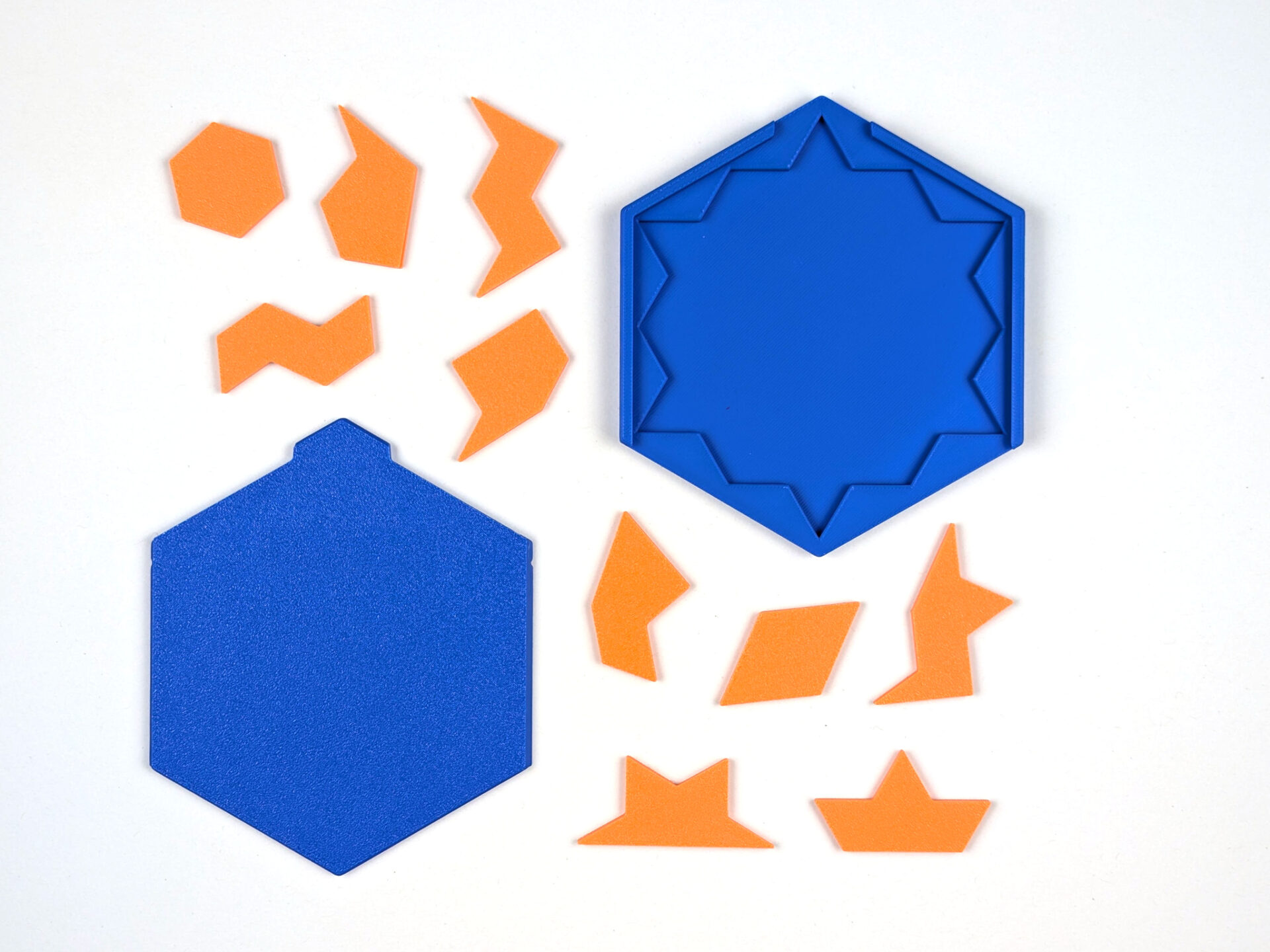
A hexapon consists of six such triangles. There are ten different hexapons; rotated or reflected versions of the same piece are not counted as separate shapes.
The number of different polypons depends on the number of triangles they contain: there are 2 dipons, 2 tripons, 4 tetrapons, 4 pentapons, 10 hexapons, 13 heptapons and 29 octapons.
Information about polypons and the star shape is available on The Poly Pages in the “Other Polyforms” section.

Hexapon Puzzles
The hexapon puzzle
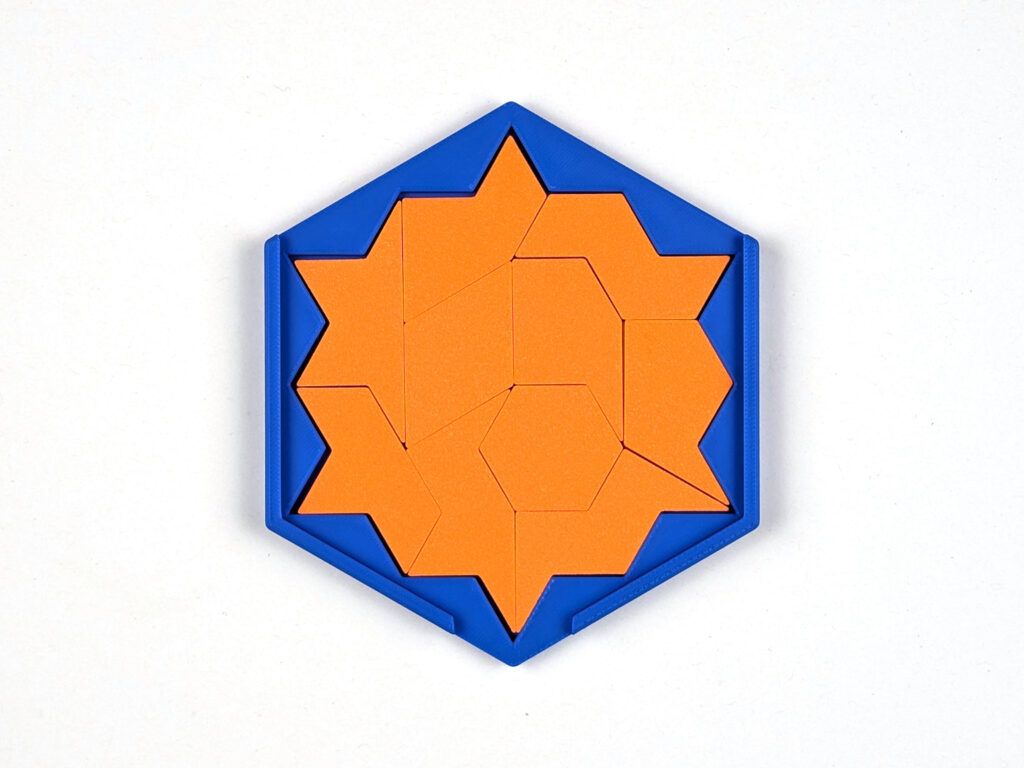
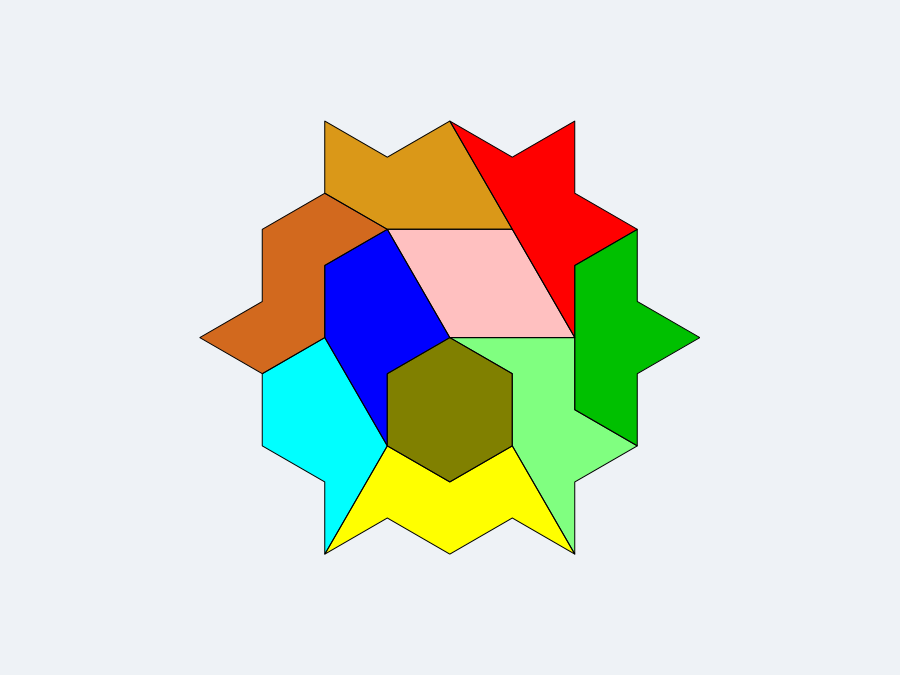
The star shown can be assembled from all ten hexapons. It consists of 60 basic triangles in total and has the maximum possible symmetry: six axes of reflection and sixfold rotational symmetry.
The star shape of the 3D-printed puzzle has exactly one solution, not counting rotated or reflected versions of the same solution. The puzzle is practically impossible to solve without computer assistance.
Symmetries of hexapon shapes
The following information applies to connected shapes assembled from all ten different hexapons. It concerns the symmetry of the overall shape. Rotated or reflected versions of the same shape are not counted as new shapes.
- The star is the only shape with maximum symmetry: six axes of reflection and sixfold rotational symmetry.
- No shapes with sixfold rotational symmetry and no axes of reflection have been found.
- There are no shapes with exactly threefold rotational symmetry, either with or without axes of reflection.
- There are only three distinct figures with exactly twofold rotational symmetry and two axes of reflection.
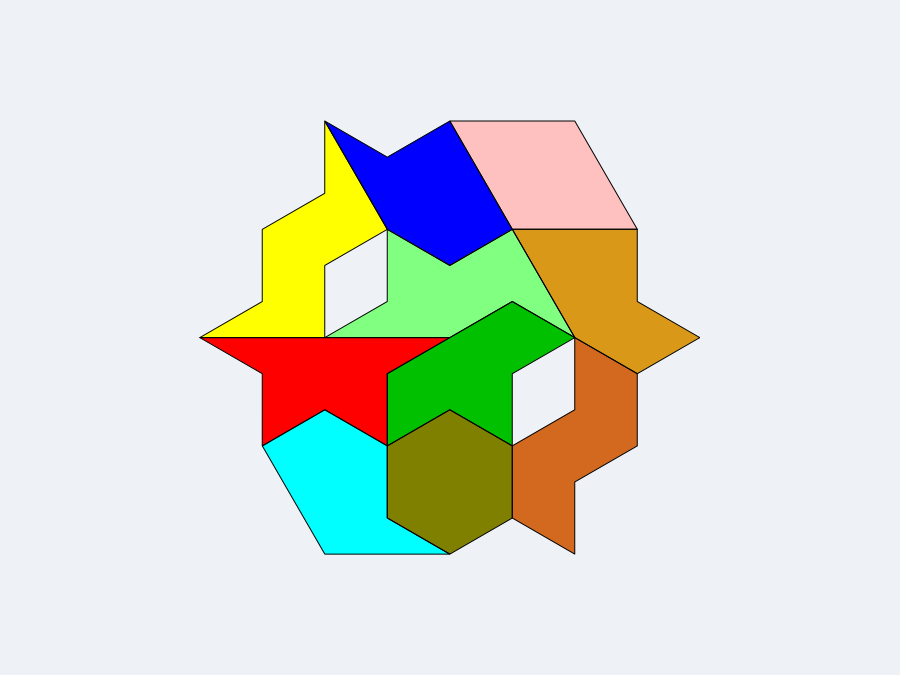
- There are numerous shapes with exactly one axis of reflection.
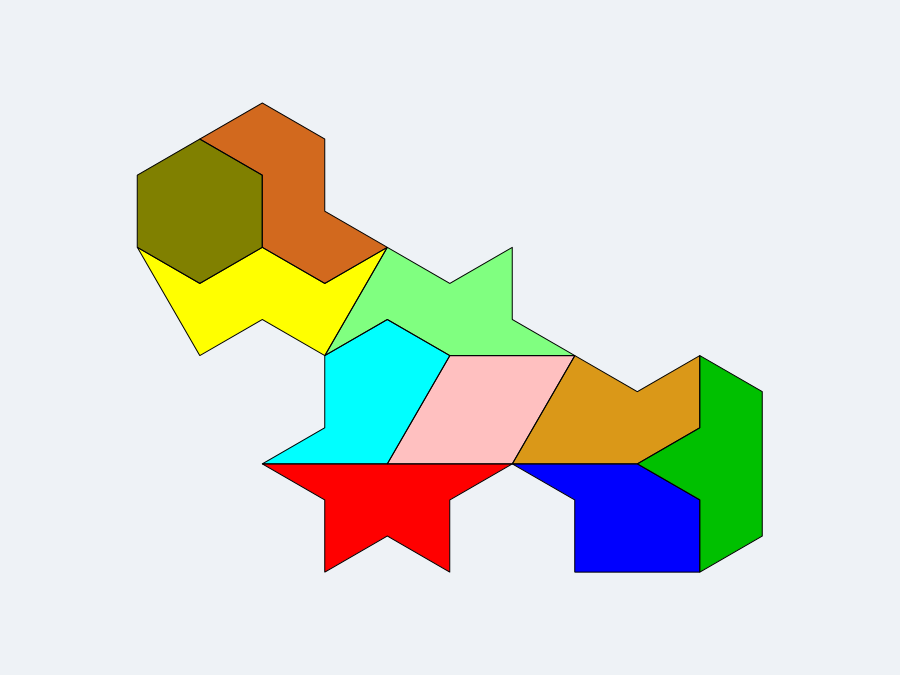
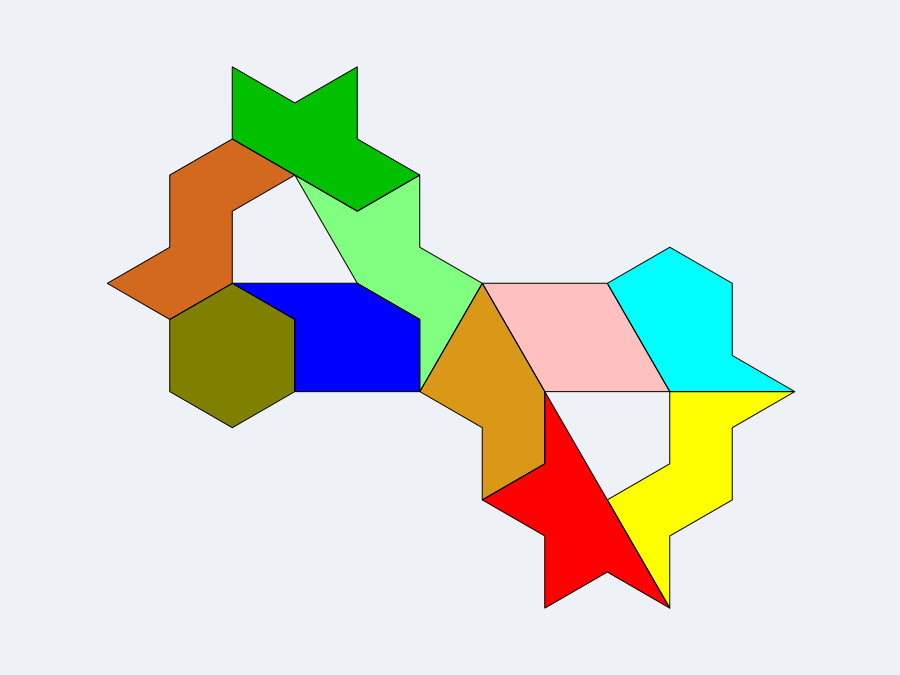
- There are many shapes with twofold rotational symmetry and no axes of reflection.
Some hexapon shapes
The examples show shapes with different types of symmetry.
Resources & Downloads
3D-printing templates
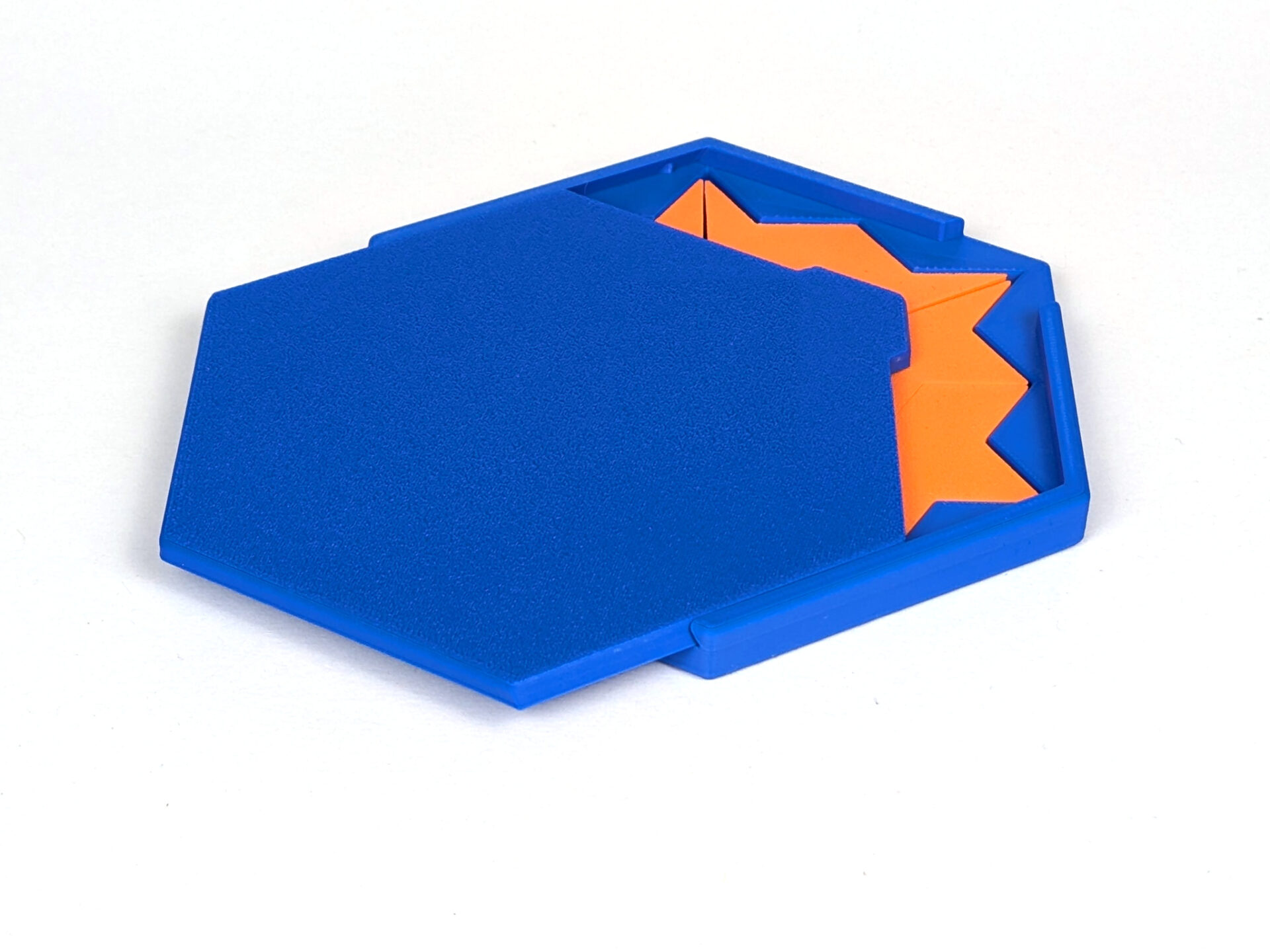
The 3D-printing templates include the ten hexapon pieces and a box with a sliding lid.