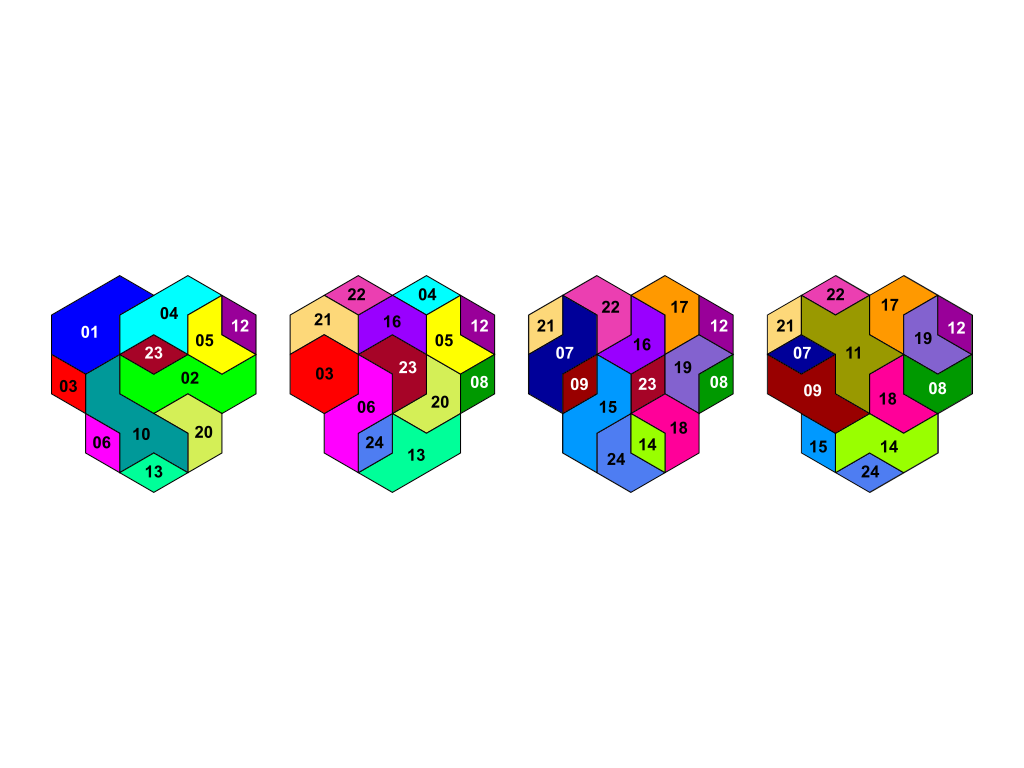
CubitPrism – The Pieces
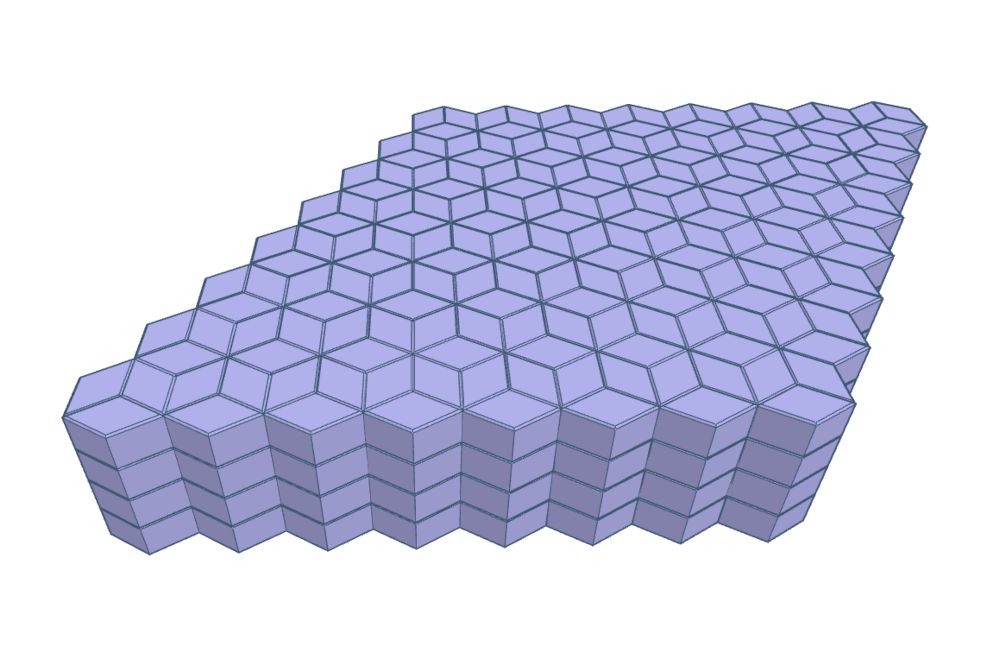
A regular hexagon can be subdivided into three rhombi with interior angles of 60° and 120°.
By extruding these rhombi, one obtains rhombic prisms.
If rhombic prisms are connected in such a way that they fit into the cubit-prism lattice, the result is polycubit prisms.
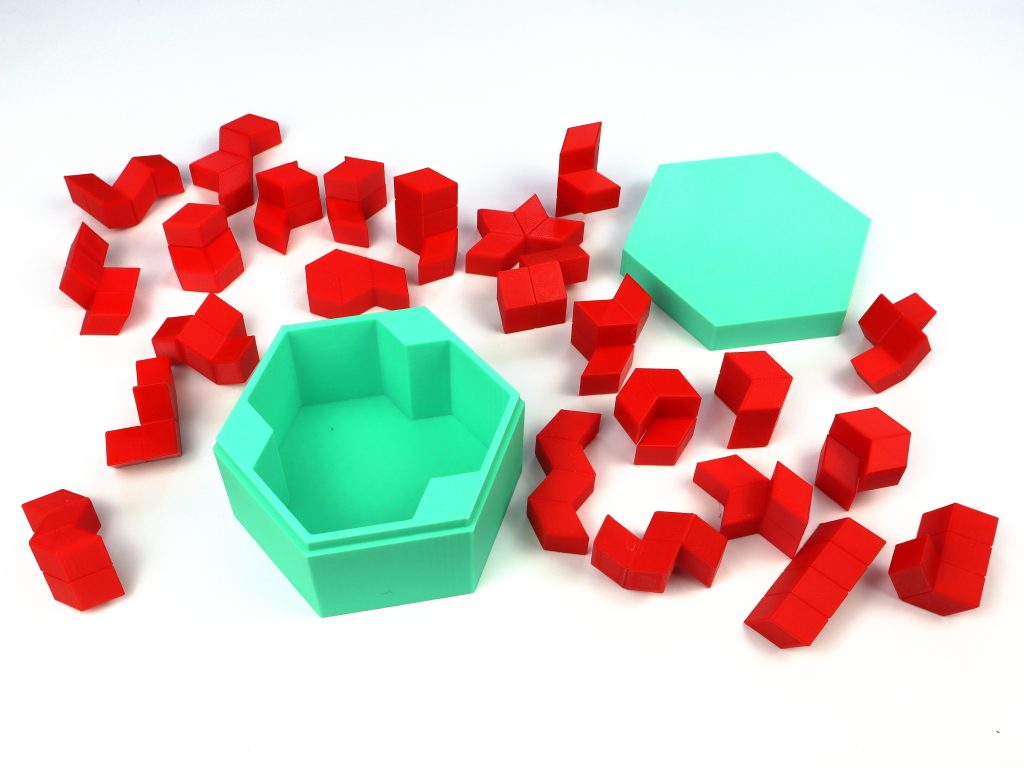
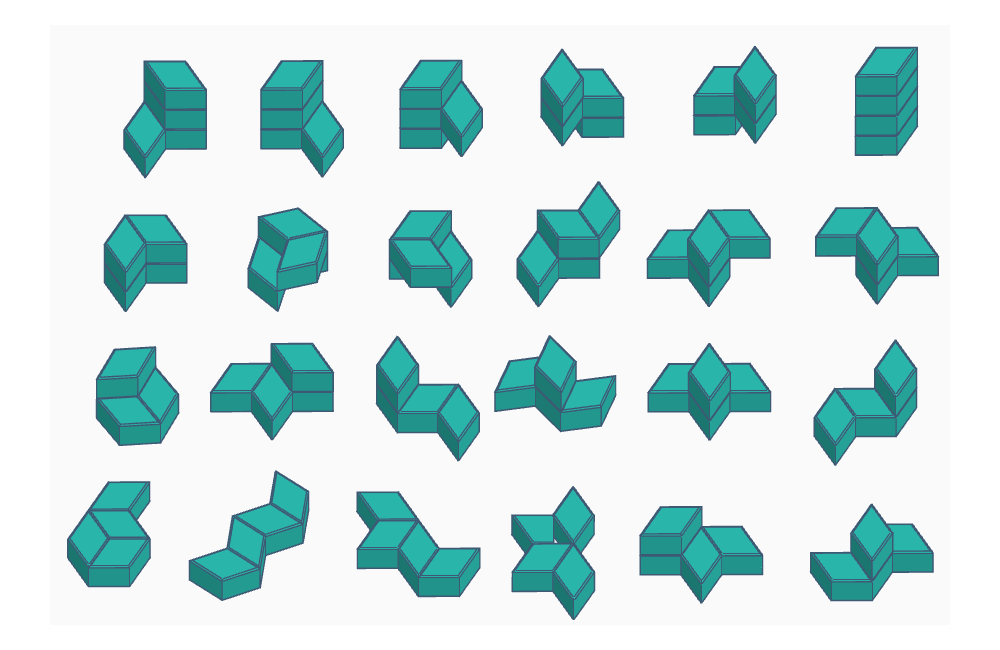
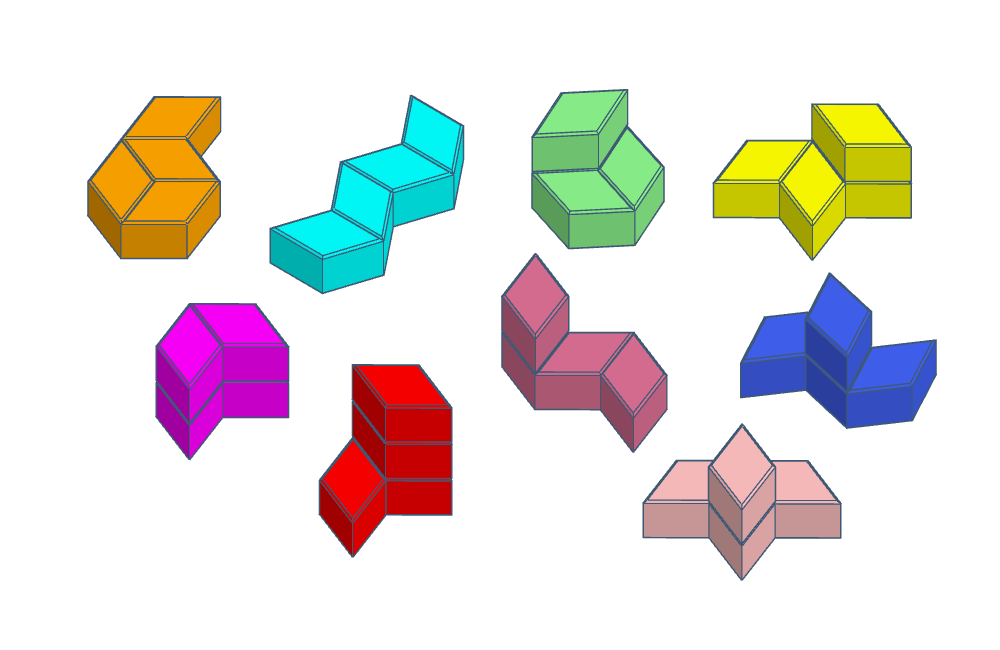
There are 2 Dicubit prisms, 6 Tricubit prisms, and 24 Tetracubit prisms.
CubitPrism-Puzzles
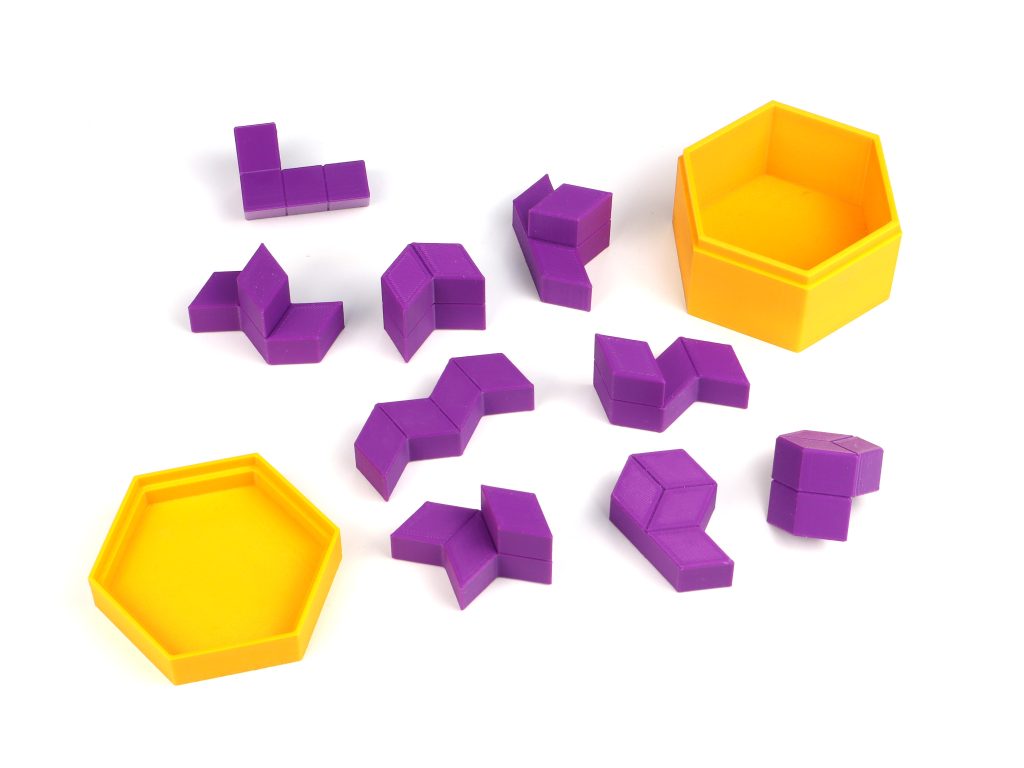
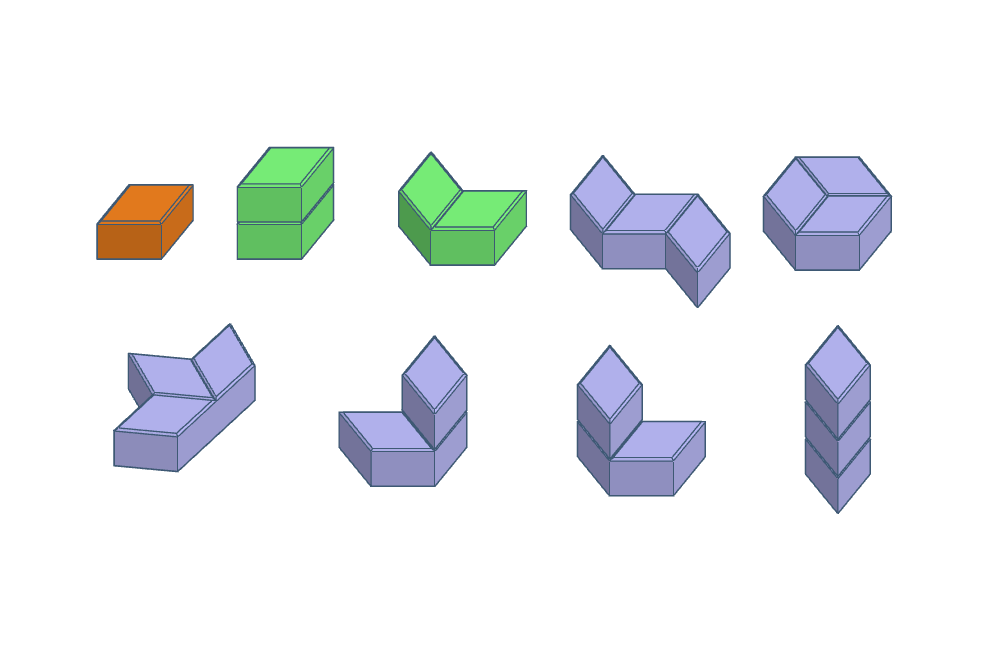
To keep the puzzle manageable and not overly difficult, a selection of 9 pieces was chosen from the full set of 24 tetra-cubit prisms.
The selection was made so that solutions exist for several different puzzle shapes and so that all pieces can be produced on a 3D printer without additional support structures.
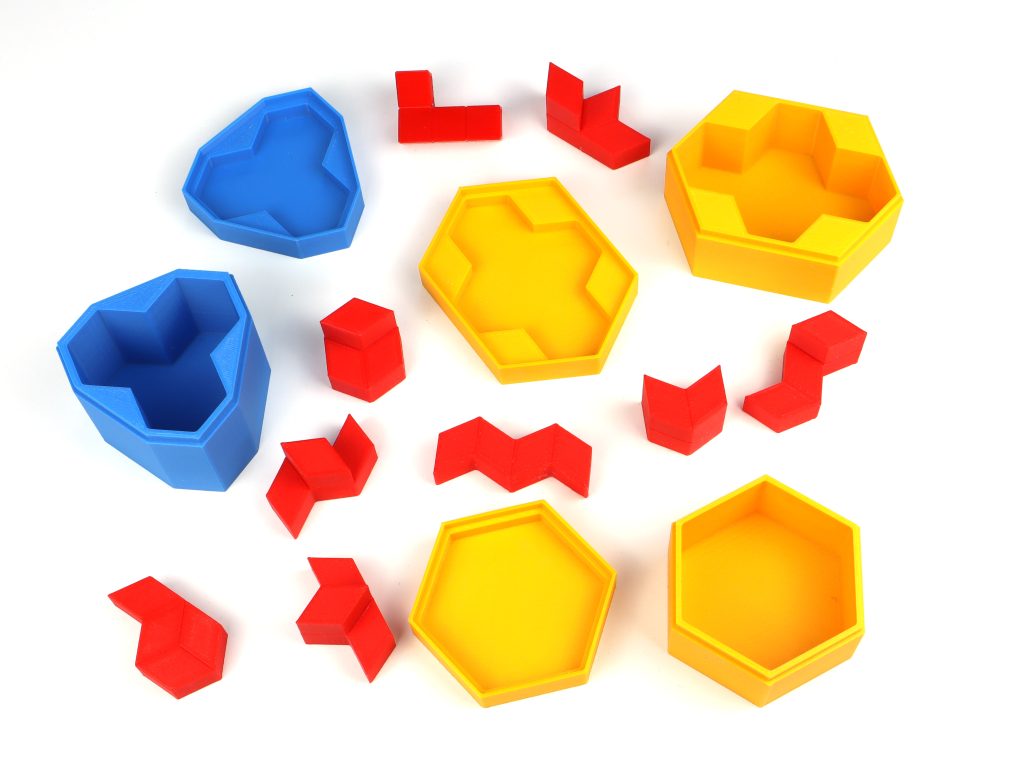
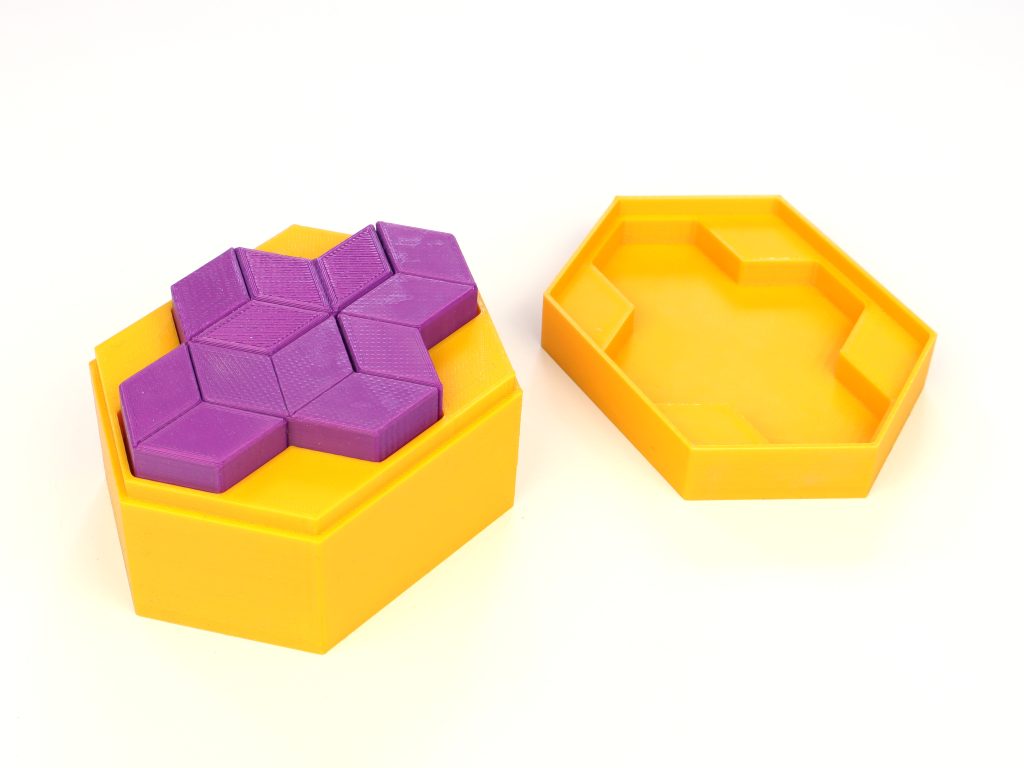
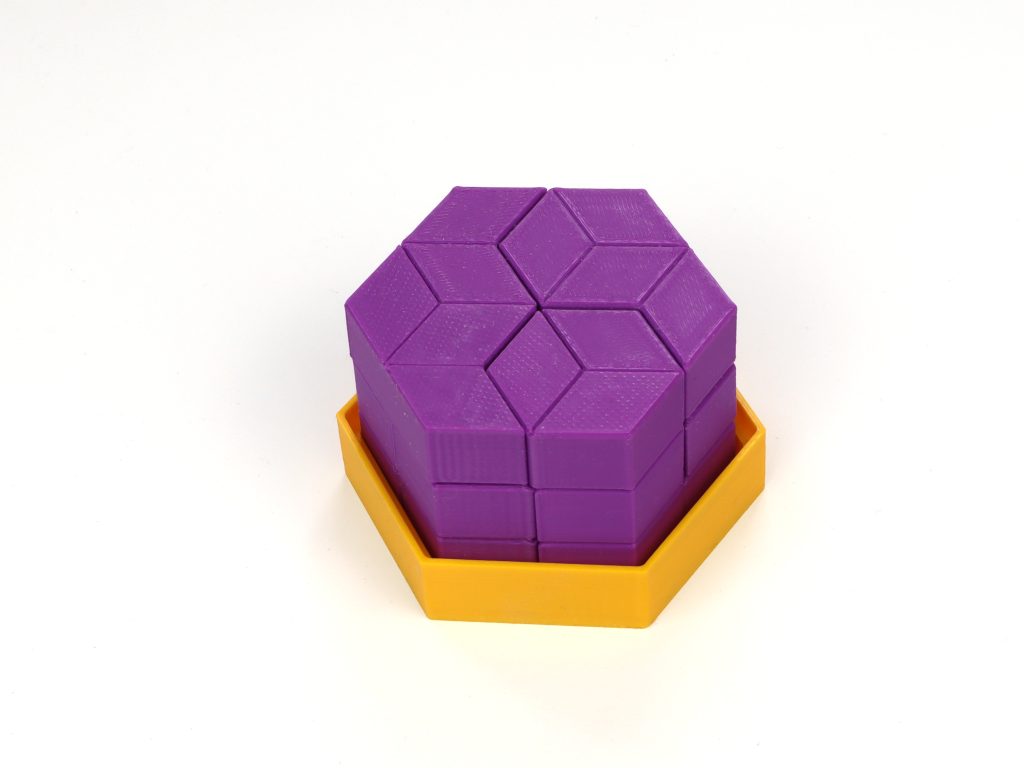
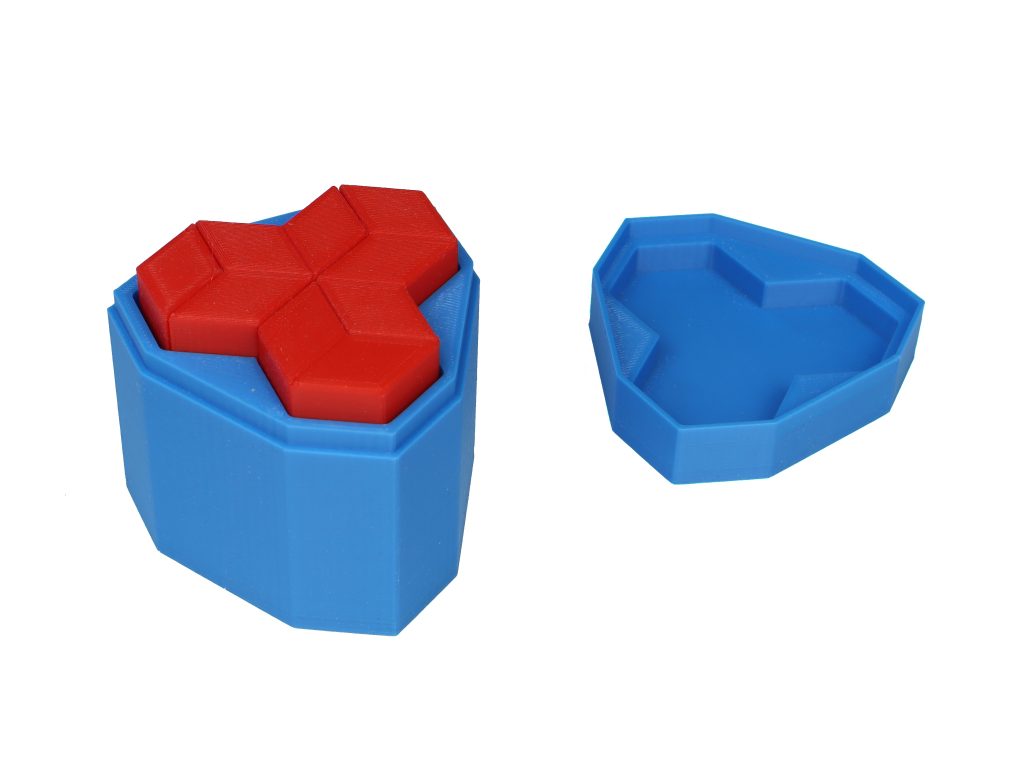
The 3D-printing templates include, in addition to the Tetracubit prisms, three different boxes that also serve as templates for puzzle shapes.
The solutions were computed using the program Burr Tools.
3 Boxes for the 9 TetraCubit Prisms
Solution Video
Resources & Downloads
3D Print Templates
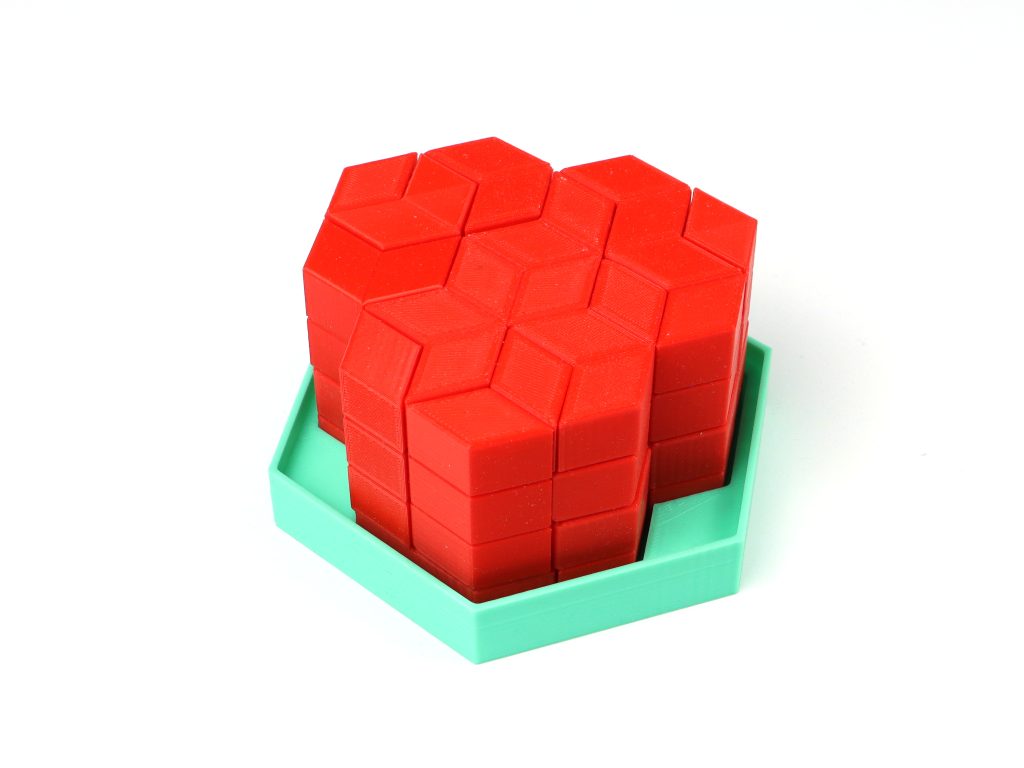
The 3D-printing templates include, in addition to the 9 Tetracubit Prisms and the 3 different boxes, the complete set of Tetracubit Prisms together with a matching box.