Honeycomb Tetrakites – The Puzzle Pieces
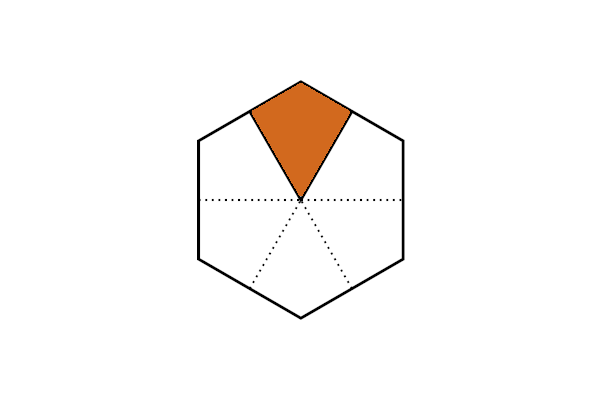
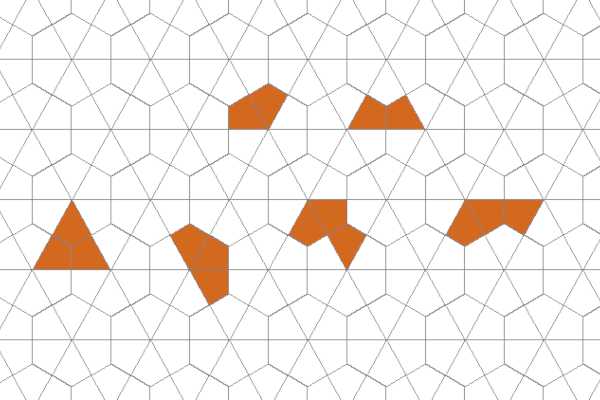
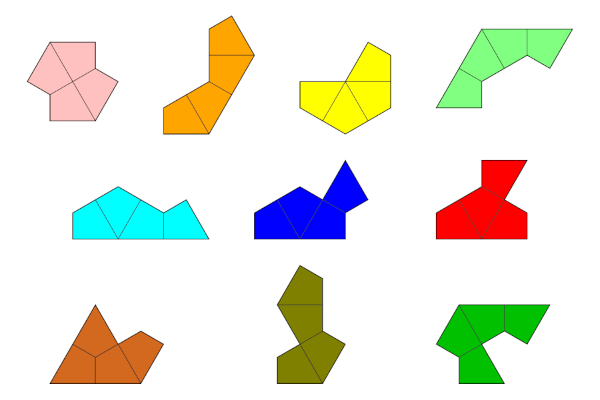
The basic shape of honeycomb tetrakites is a kite that forms one sixth of a regular hexagon. Each puzzle piece consists of four such kites. The pieces fit together on the honeycomb grid shown below.
Honeycomb tetrakites belong to the family of honeycomb polykites.
There are 2 dikites, 4 trikites, 10 tetrakites, 27 pentakites and 85 hexakites.
Honeycomb Tetrakite Puzzles
Shapes made from all ten honeycomb tetrakites cover an area of 40 kites. Symmetric shapes made from this complete set have exactly one axis of reflection.
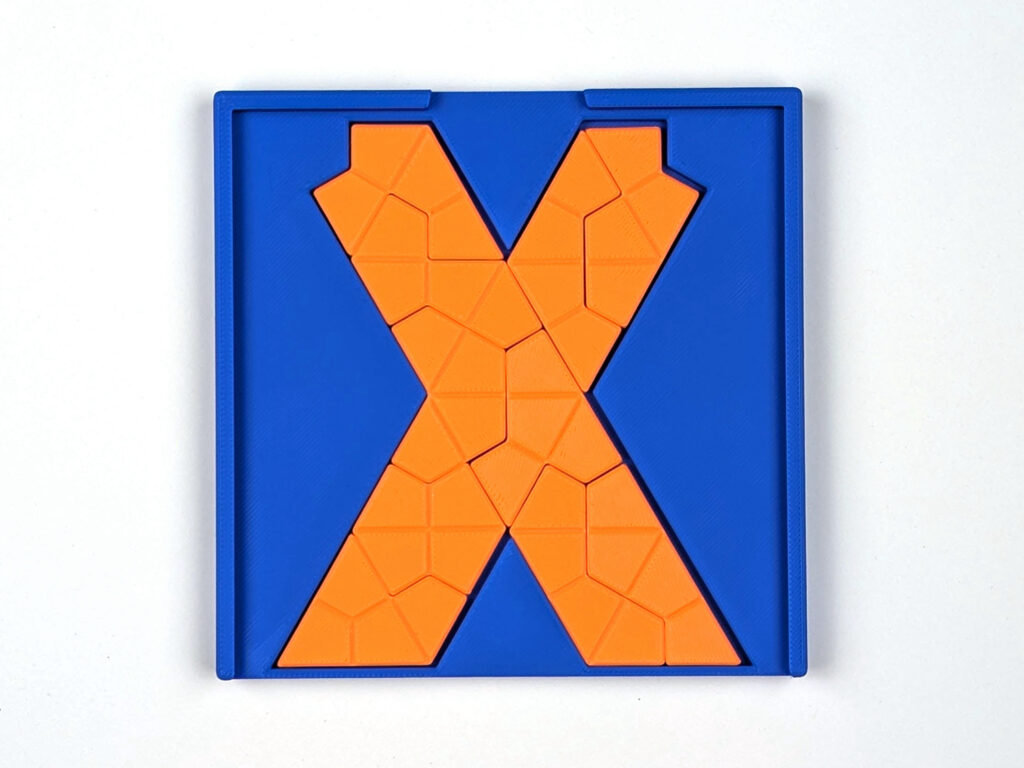
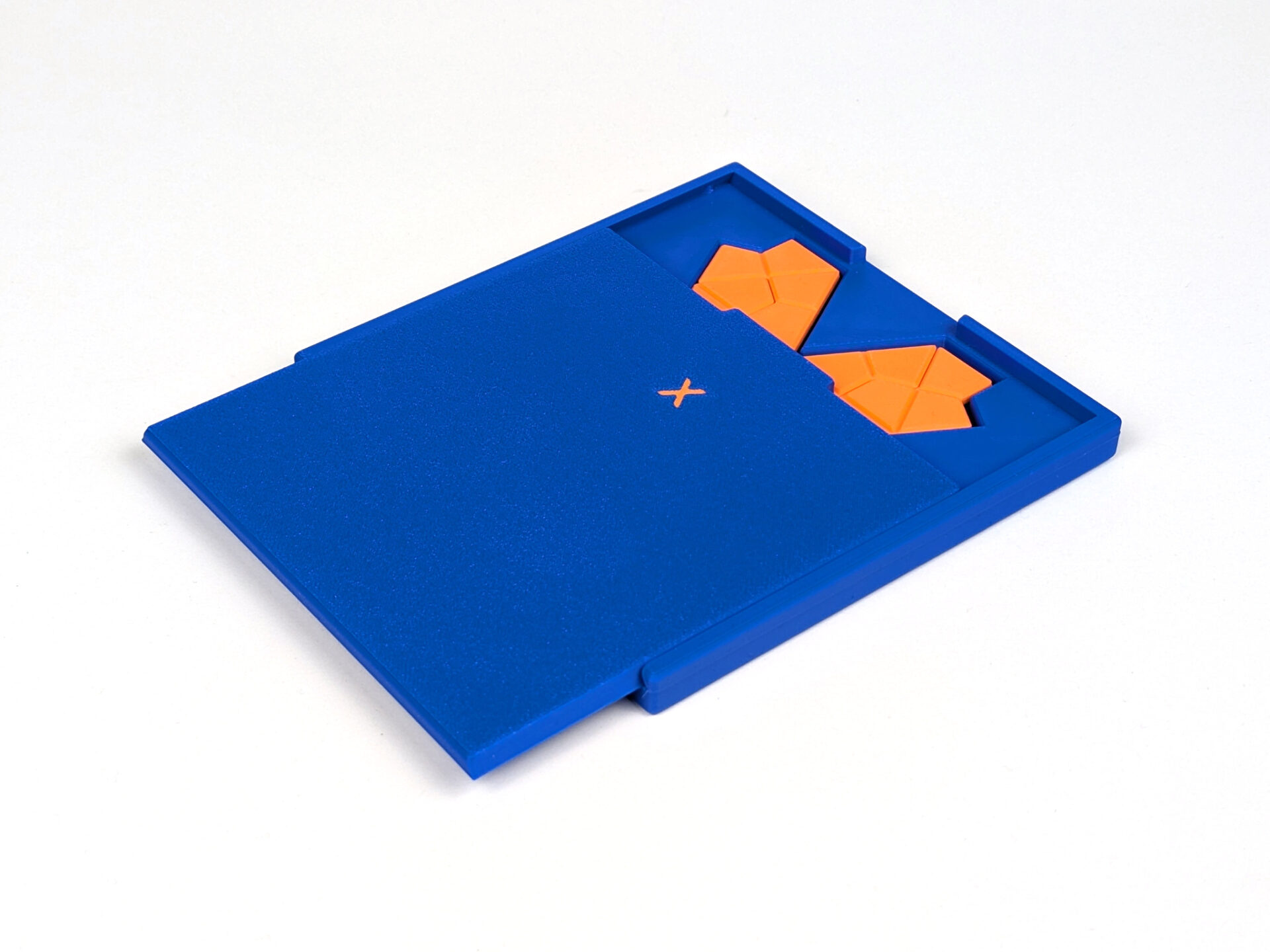
3D-Printed Puzzle “X”
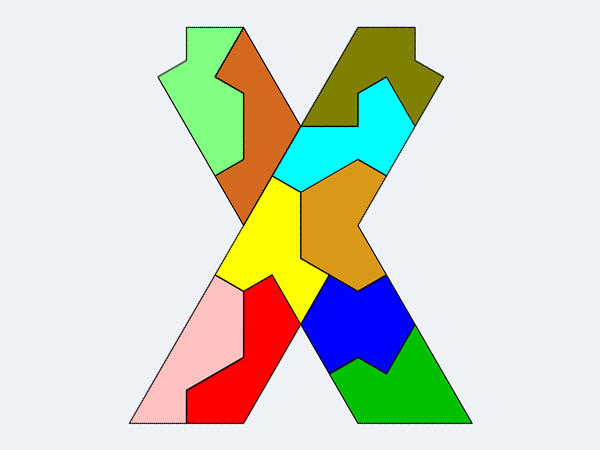
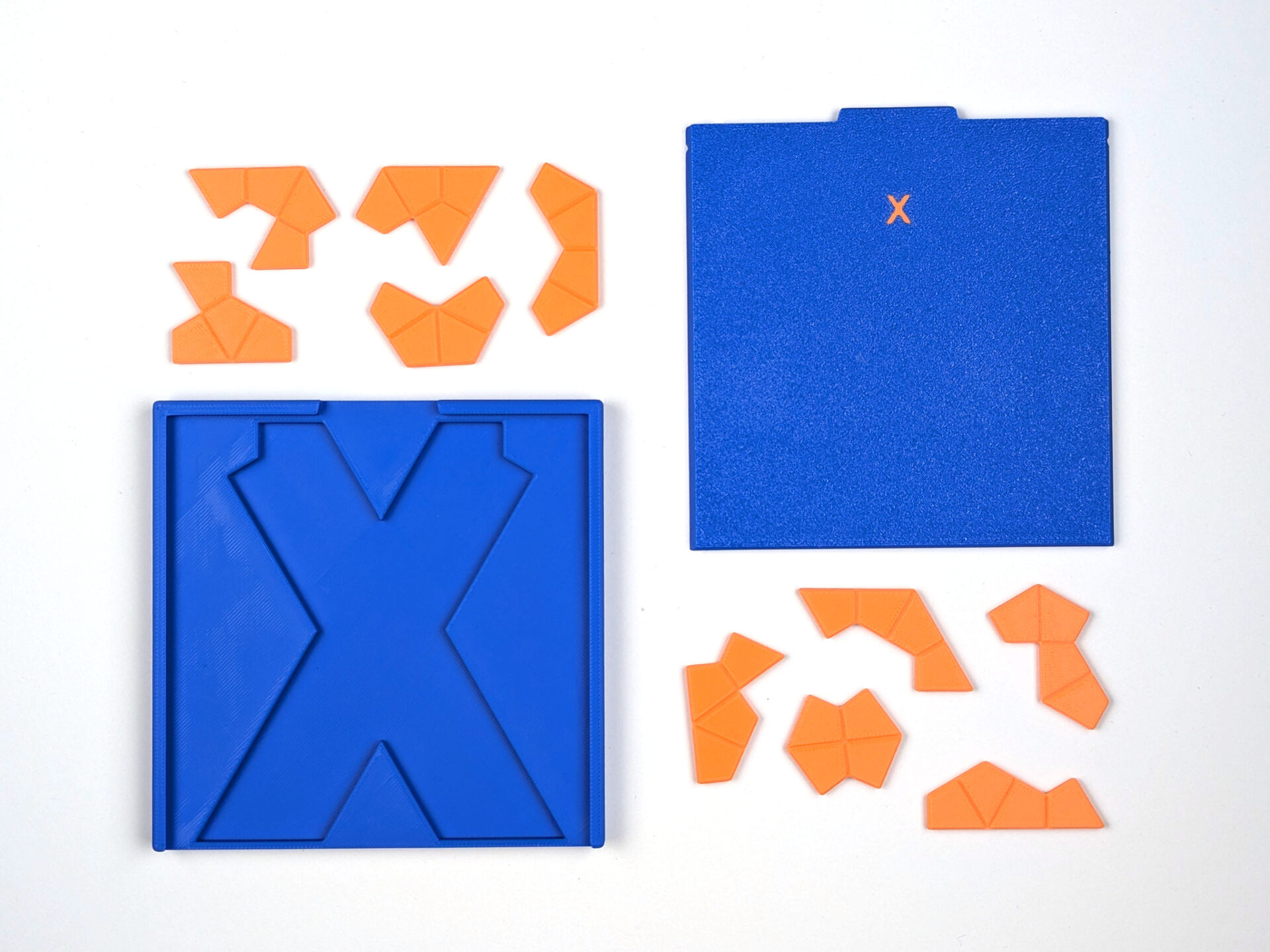
The X puzzle uses all ten honeycomb tetrakites. It is moderately challenging and has eight distinct solutions (with symmetrical variants counted only once).
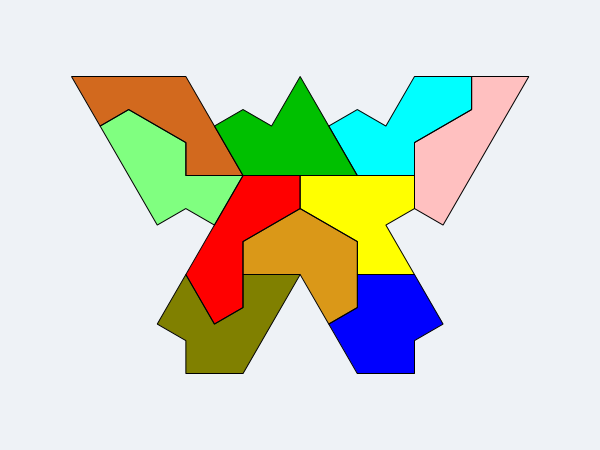
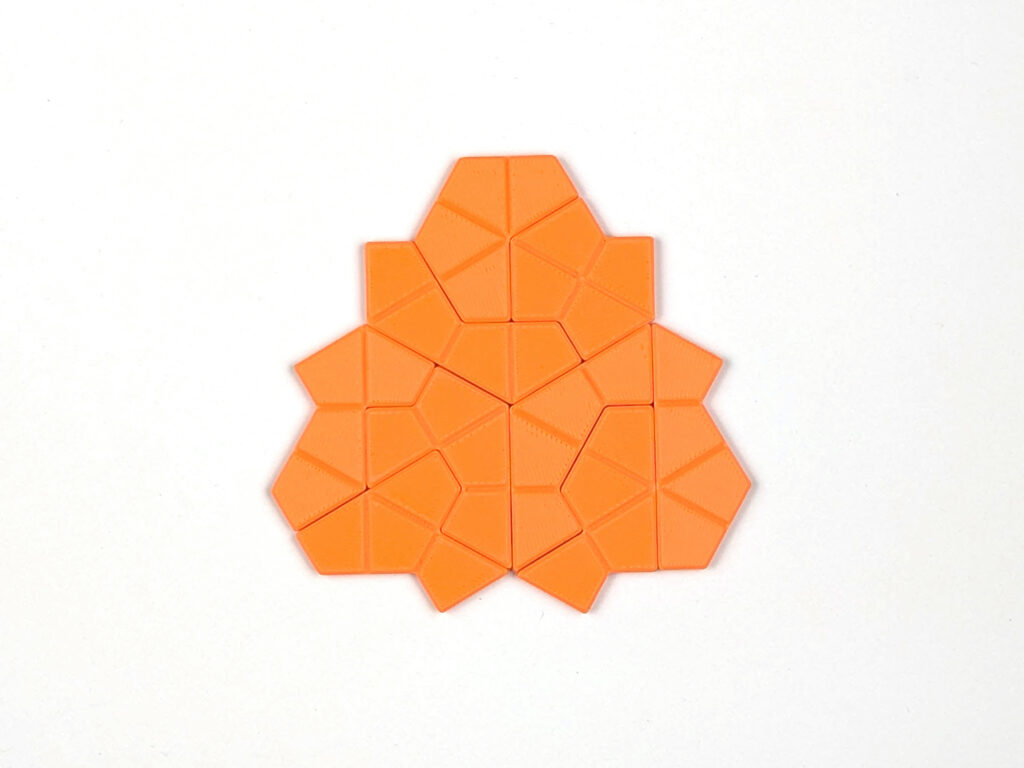
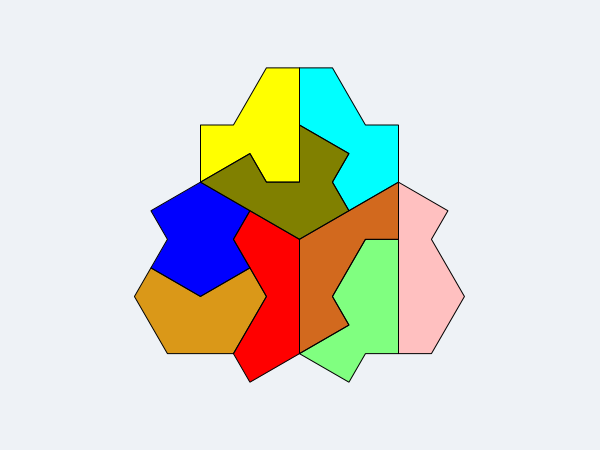
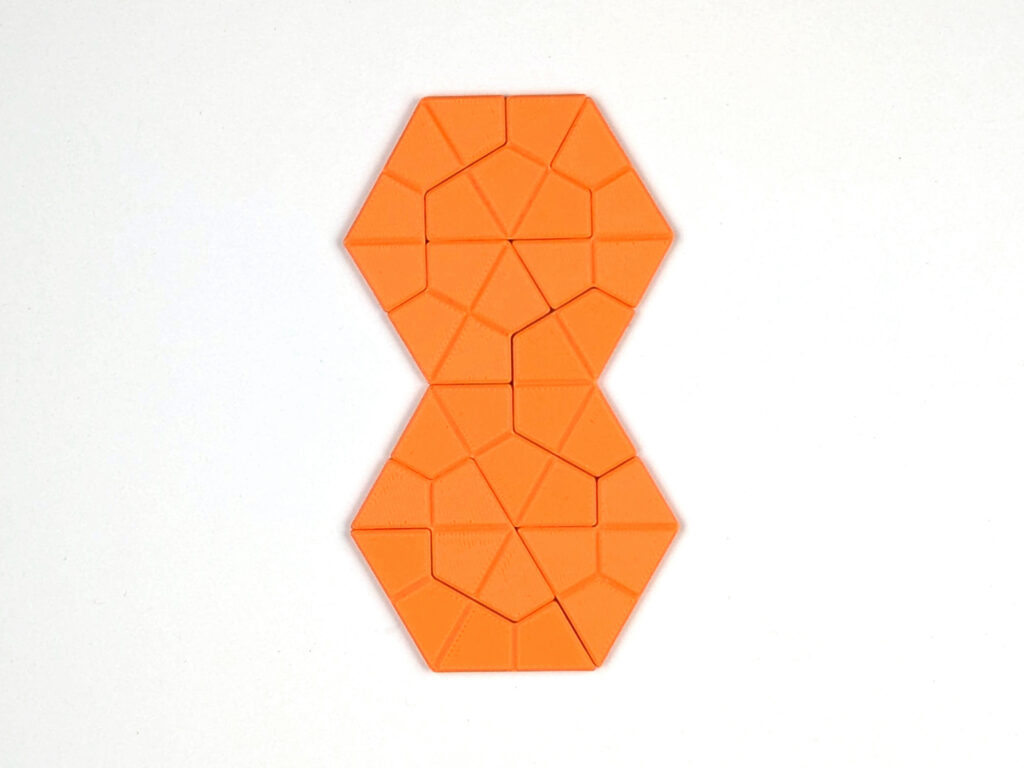
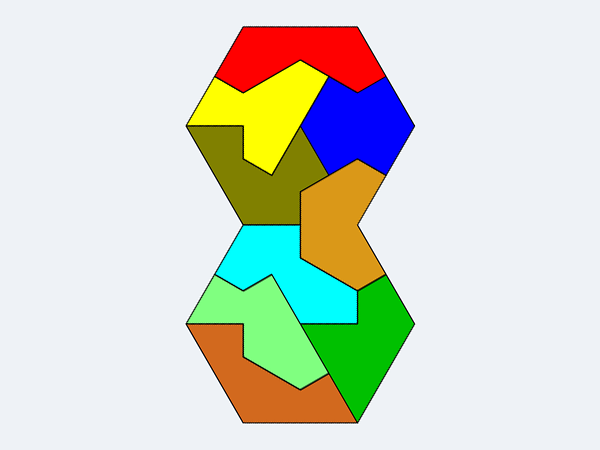
The same pieces can be used to assemble other shapes. The first row of images shows the X puzzle and another shape made from all ten tetrakites.

Other Shapes Made from Nine Honeycomb Tetrakites
The first shape has threefold rotational symmetry and three axes of reflection. The second shape has twofold rotational symmetry and two axes of reflection.
Symmetries of Shapes Made from 10 Tetrakites
Possible Symmetries on the Honeycomb Kite Grid
The honeycomb kite grid allows shapes with twofold, threefold and sixfold rotational symmetry. These can occur without reflection symmetry, or with two, three or six axes of reflection respectively. Shapes with a single axis of reflection are also possible.
Why Are Threefold and Sixfold Rotational Symmetries Impossible?
In a shape with threefold rotational symmetry, the kites must form complete groups of three, with rotation mapping each kite to the next. Sixfold rotational symmetry similarly requires groups of six. A single kite has neither of these rotational symmetries.
The complete set of ten honeycomb tetrakites contains 40 kites. Since 40 is divisible by neither three nor six, both rotational symmetries are impossible.
Why Is Twofold Rotational Symmetry Impossible?
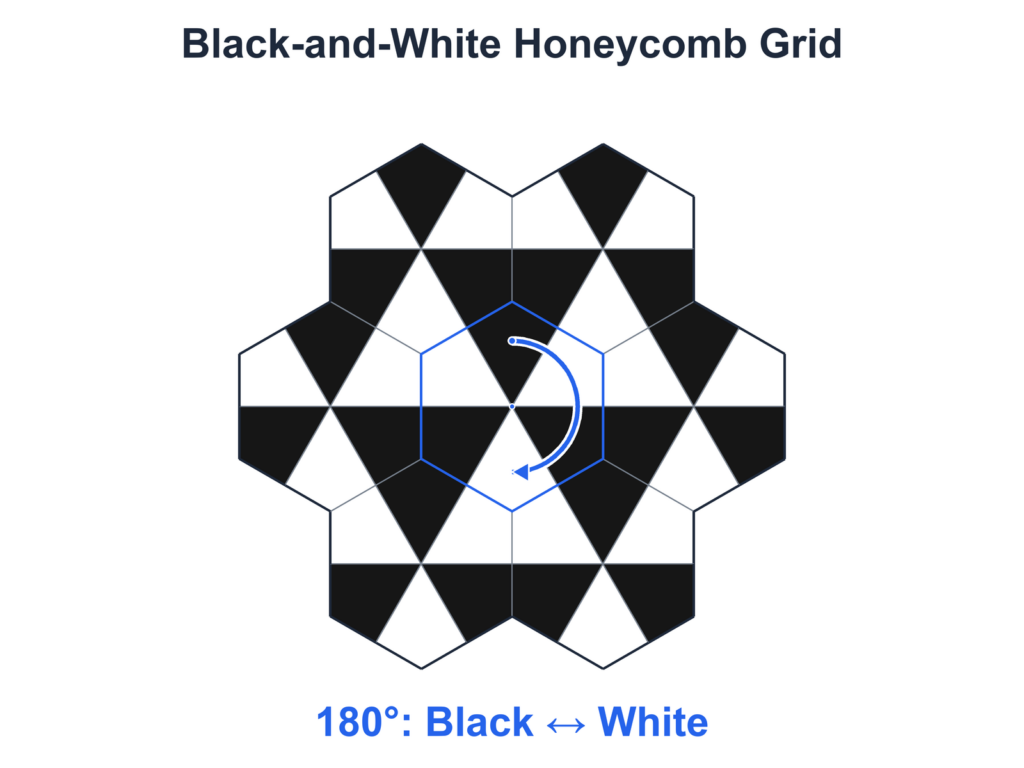
A black-and-white colouring helps explain this: the six kites in each hexagon of the honeycomb grid are coloured alternately black and white. The colouring has the same orientation throughout the grid.
A rotation through 180° swaps black and white. A shape with twofold rotational symmetry would therefore have to contain equal numbers of black and white cells – 20 of each for a total of 40 cells.
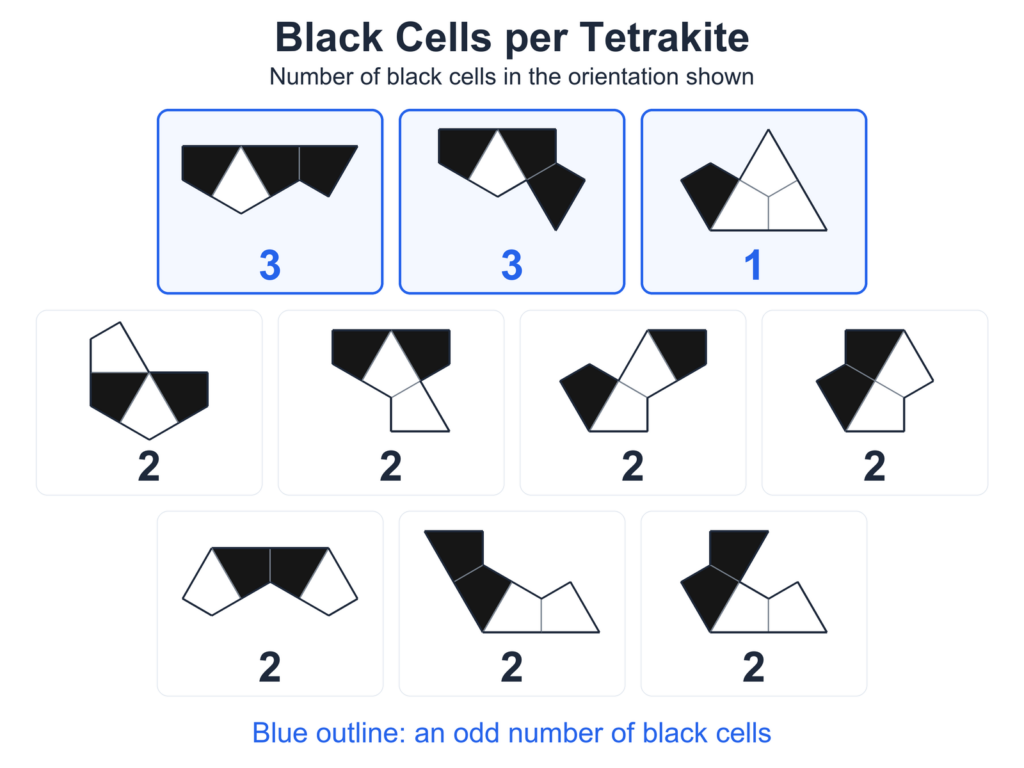
However, three of the ten tetrakites always cover an odd number of black cells, while the other seven cover an even number. Rotating or turning over a piece preserves this odd/even property. The complete set therefore always covers an odd number of black cells. The required total of 20 black cells cannot be reached.
More than one axis of reflection is also impossible, since this would imply rotational symmetry. A single axis of reflection is therefore the only possible symmetry for the complete set. These exclusions also apply to shapes with holes.
Resources & Downloads
3D-Printing Templates
The 3D-printing templates for the X puzzle include ten honeycomb tetrakites and a box with a sliding lid.
The website The Poly Pages provides further information on tetrakites, pentakites, hexakites and heptakites.