Hexiamonds – the puzzle pieces
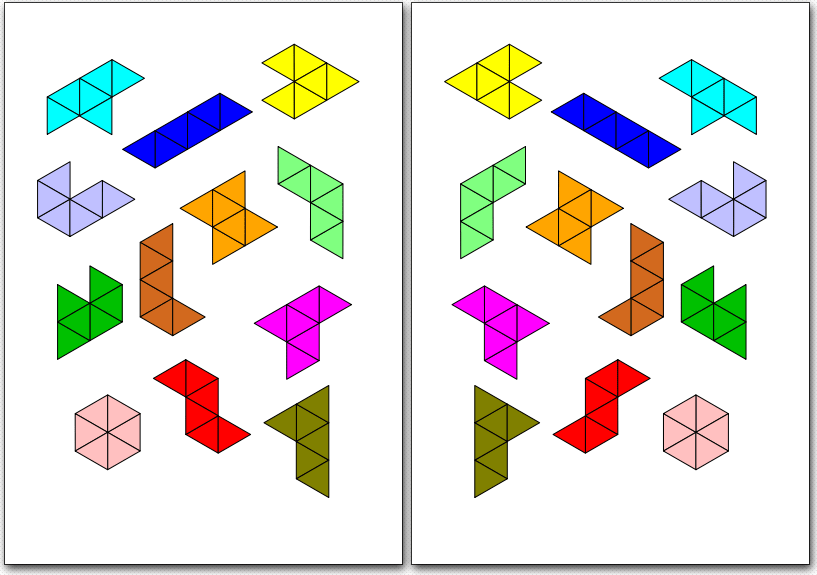
Hexiamonds are made of six equilateral triangles joined along their edges. Up to rotations and reflections, there are twelve different shapes. They belong to the polyiamond family.
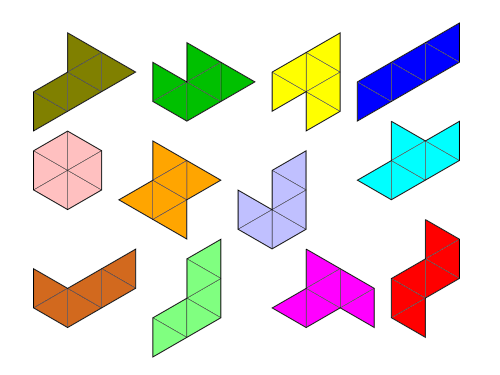
Hexiamond Puzzles
Where can you get Hexiamonds?
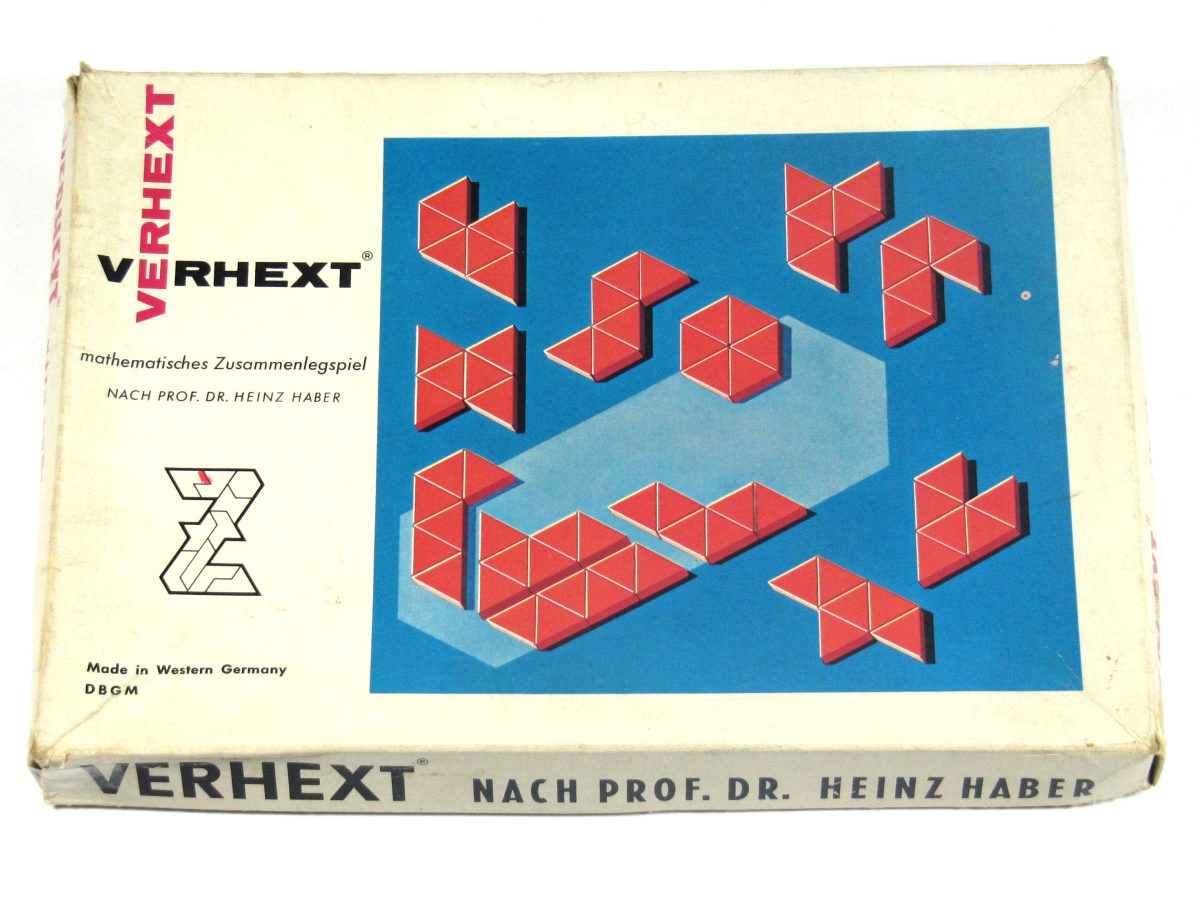
In the 1960s, Prof. Heinz Haber released the Hexiamonds as a tiling game under the name VERHEXT, making them well known in Germany.
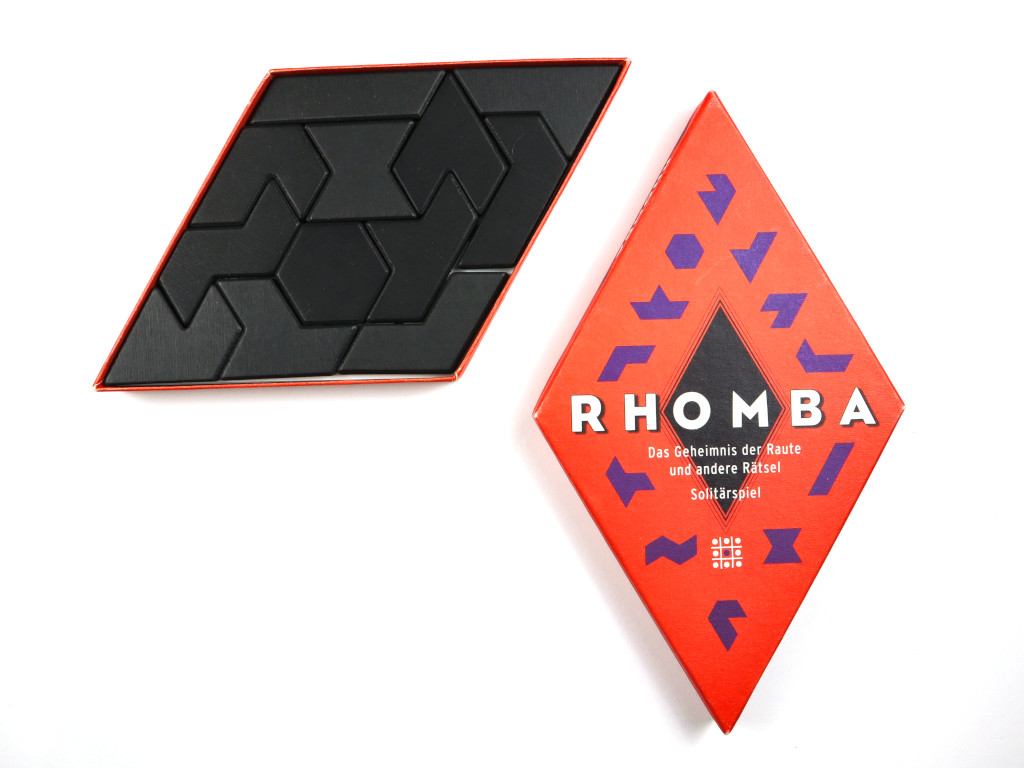
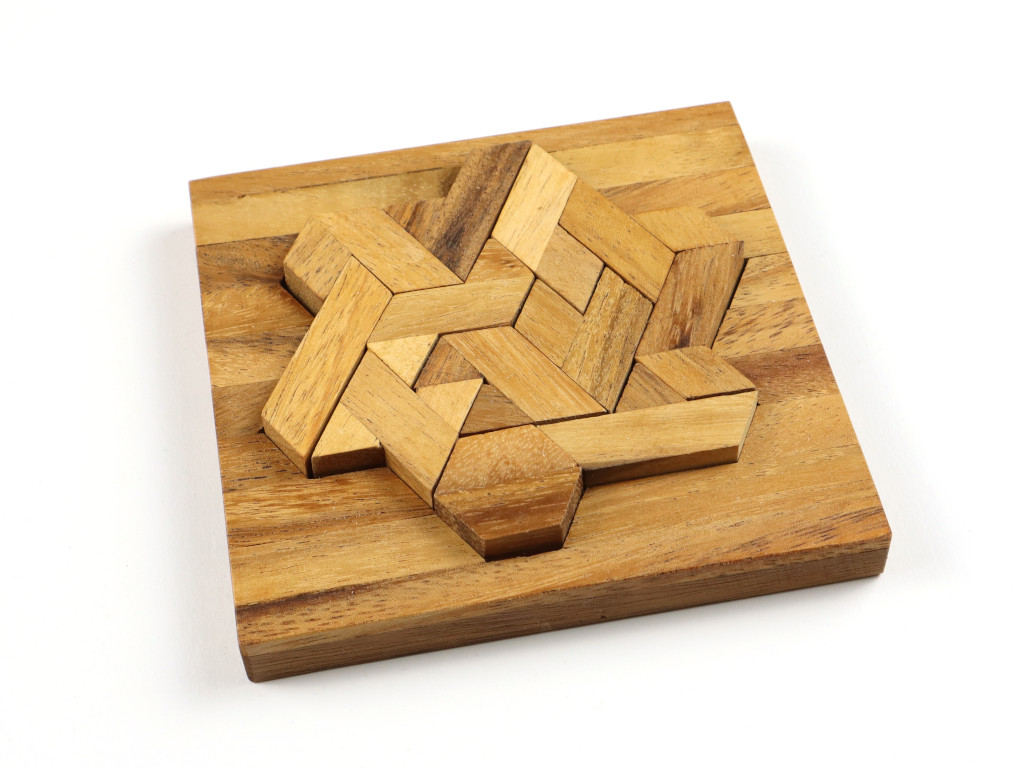
A particularly beautiful Hexiamond puzzle was RHOMBA, a game made from black wooden pieces with an elegant design.
Both games are occasionally still listed on platforms such as eBay. New Hexiamond puzzles can also still be purchased today.
Shapes and Solver
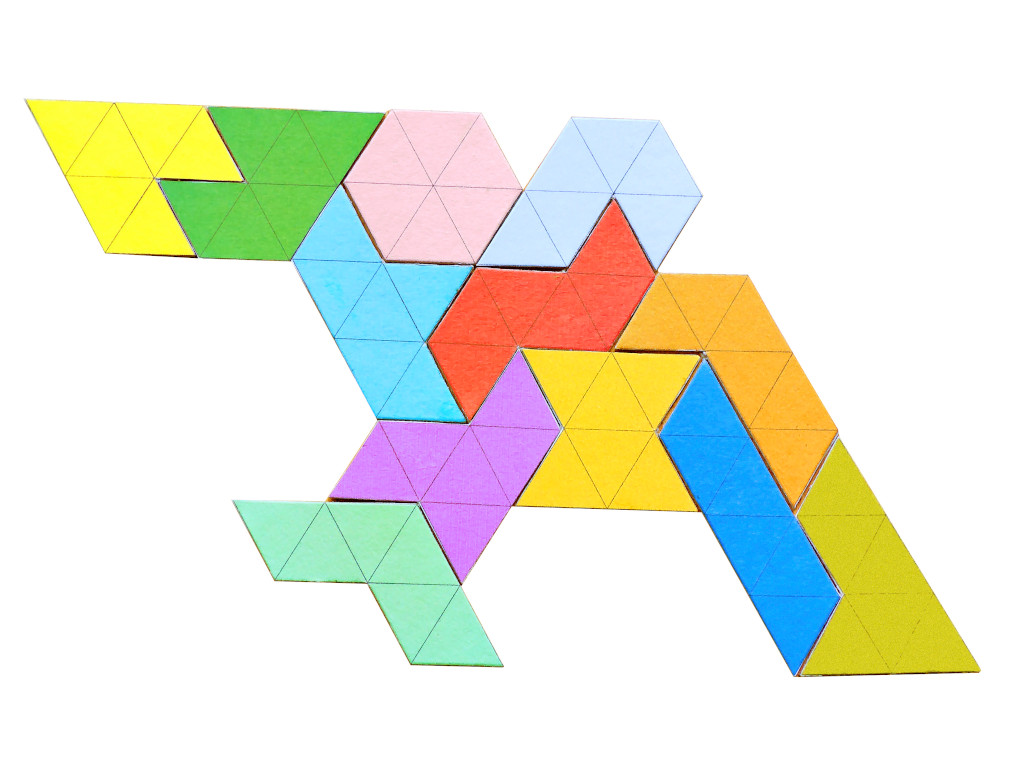
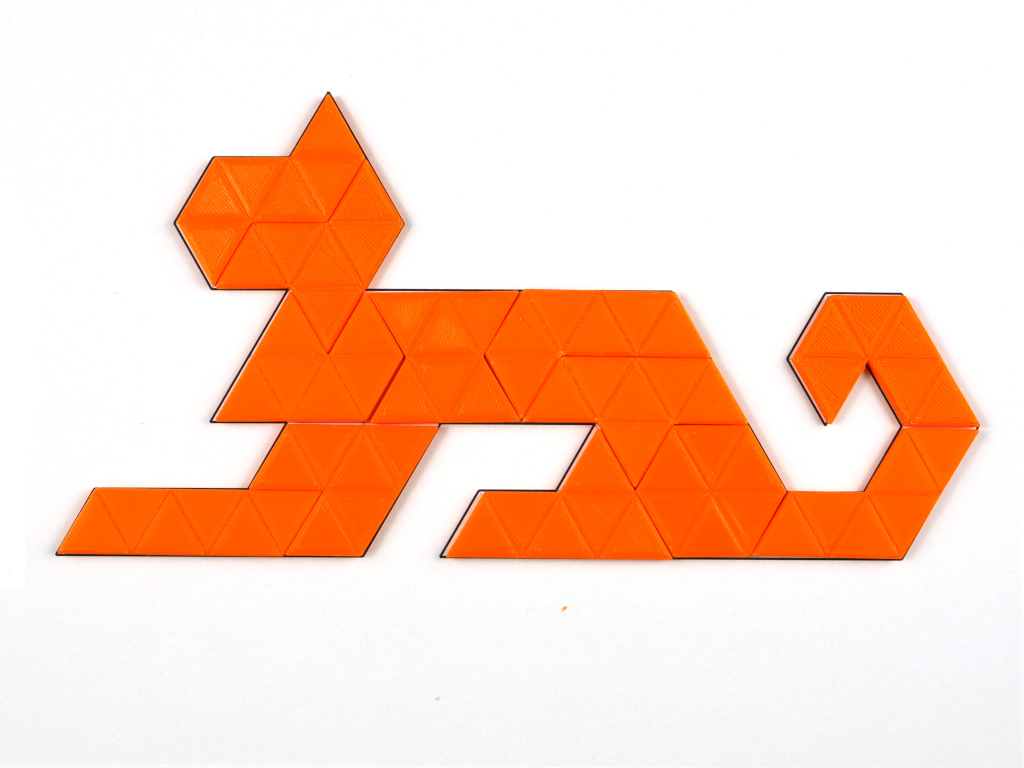
The Hexiamond shapes gallery shows a selection of symmetrical shapes made from Hexiamonds.
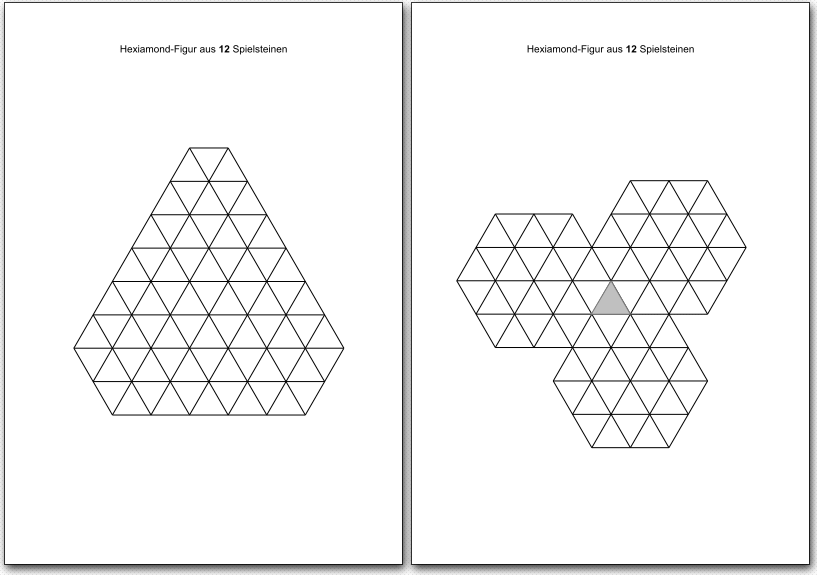
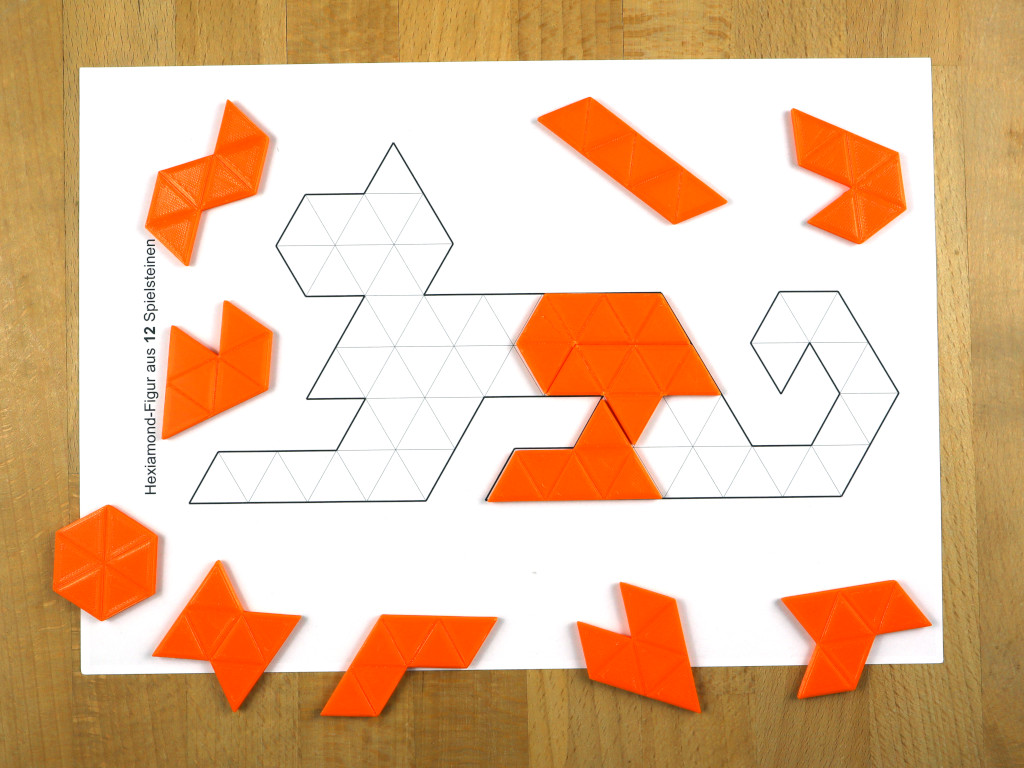
The figure templates are designed to match the cardboard templates for Hexiamonds. See the “Figure Templates” section for information on using them with 3D-printed Hexiamonds.
The online Hexiamond solver on this website lets you create your own shapes and check whether they can be solved.
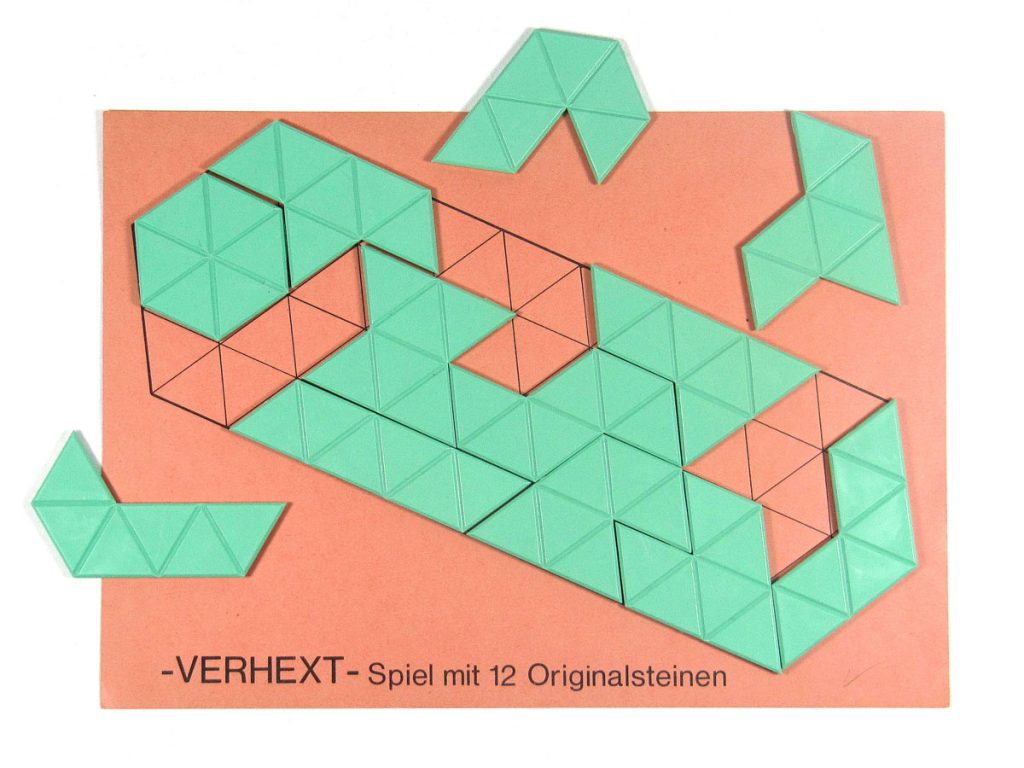
Tiling Hexiamond Shapes
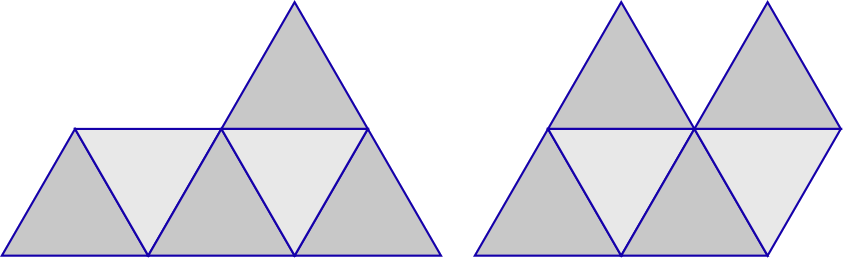
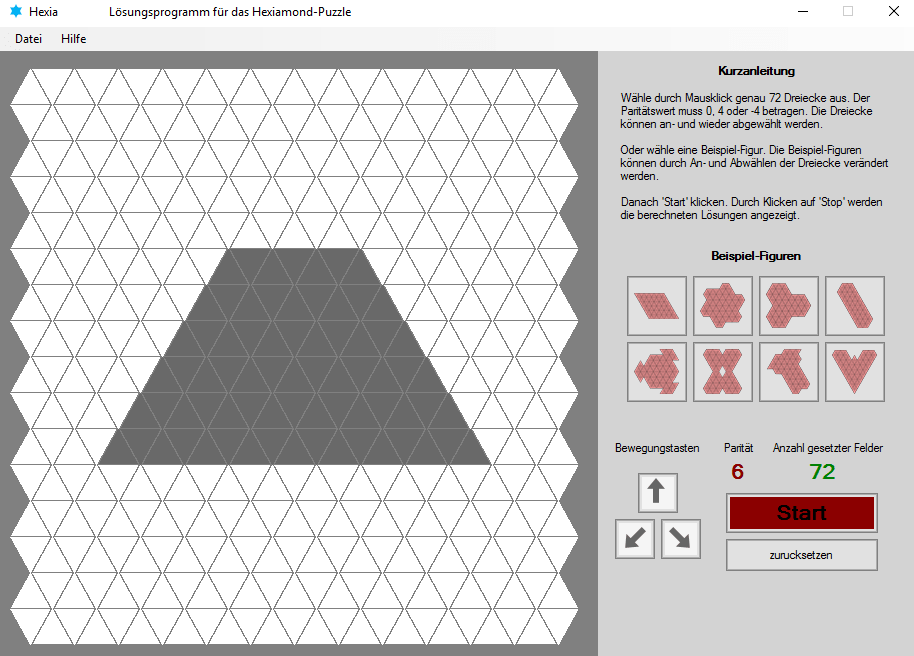
Ten of the twelve Hexiamonds each contain three upward-pointing and three downward-pointing triangles. Depending on their orientation, each of the other two contains either two upward-pointing and four downward-pointing triangles, or the reverse. Therefore, for a target shape to be tiled with all twelve pieces, the number of upward-pointing triangles minus the number of downward-pointing triangles must be 0, +4 or −4. If the difference is any other value, the shape cannot be tiled with all twelve pieces.
One-sided Hexiamonds
The one-sided Hexiamonds are a variant of the classic Hexiamond puzzle.
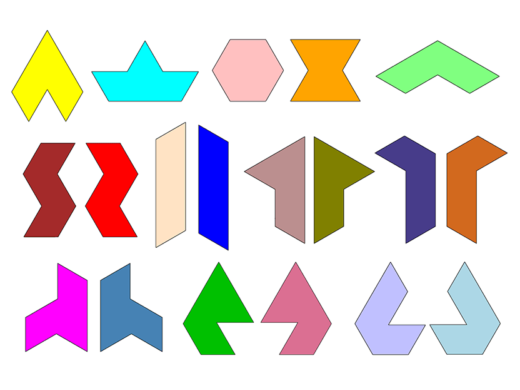
Of the twelve regular Hexiamond pieces, seven are not mirror-symmetric. If their mirror images are treated as distinct shapes, without turning the pieces over, the one-sided set contains 19 different Hexiamonds in total.
Where can you get one-sided Hexiamonds?
To make an extended set of one-sided Hexiamonds, you can use the existing 3D-printing files or the cardboard templates for Hexiamonds. Both sets of templates were originally designed for the regular set of twelve pieces.
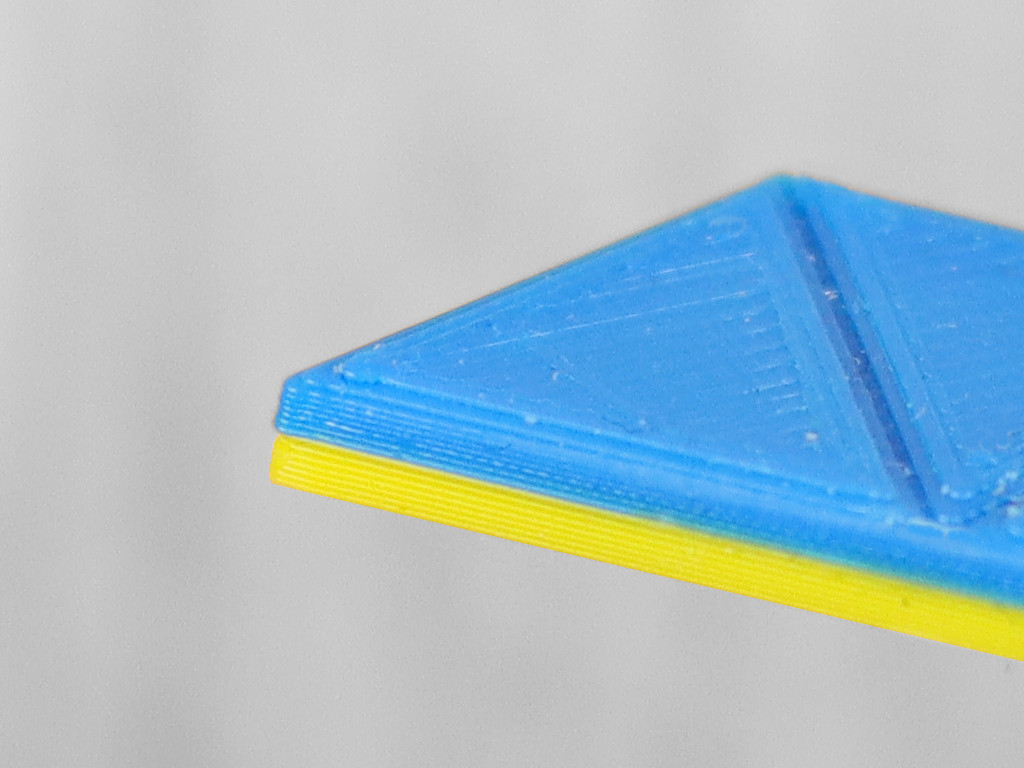
The front and back of each piece must be different colors so that mirror images remain identifiable as distinct shapes.
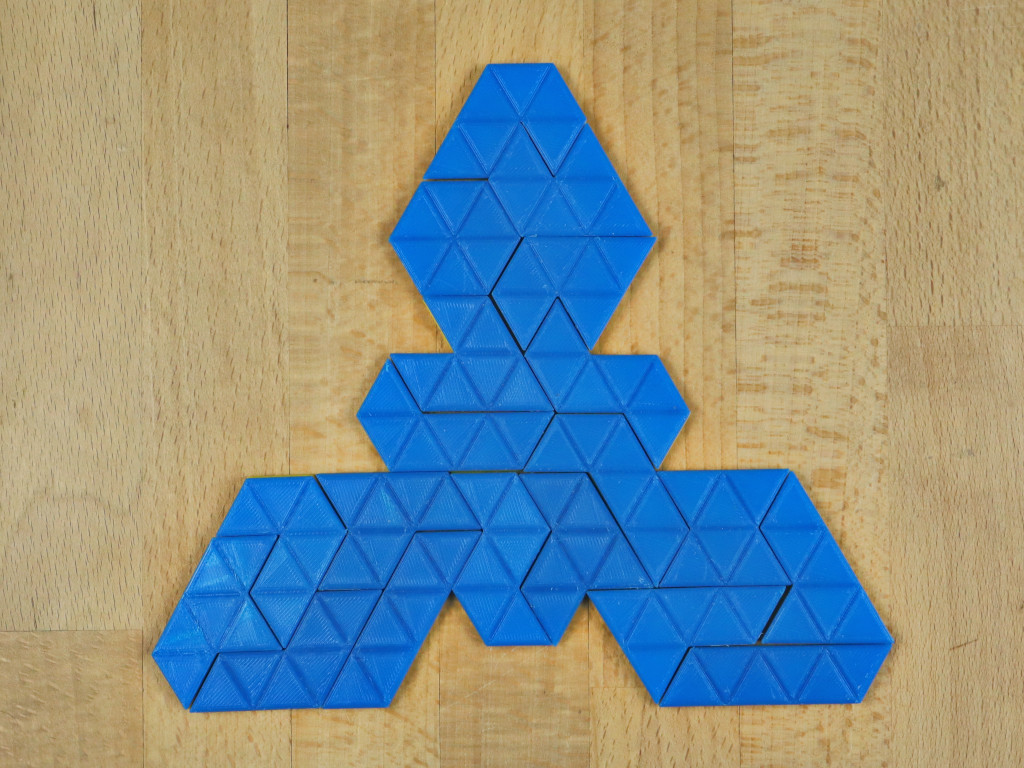
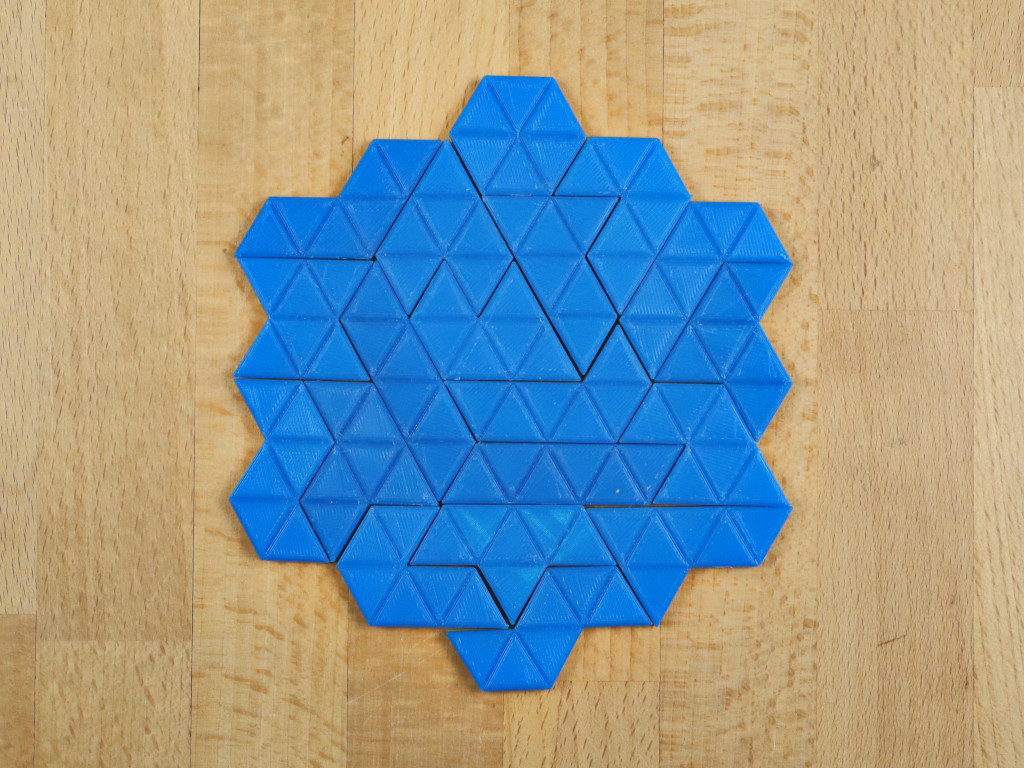
Shapes with Maximum Symmetry
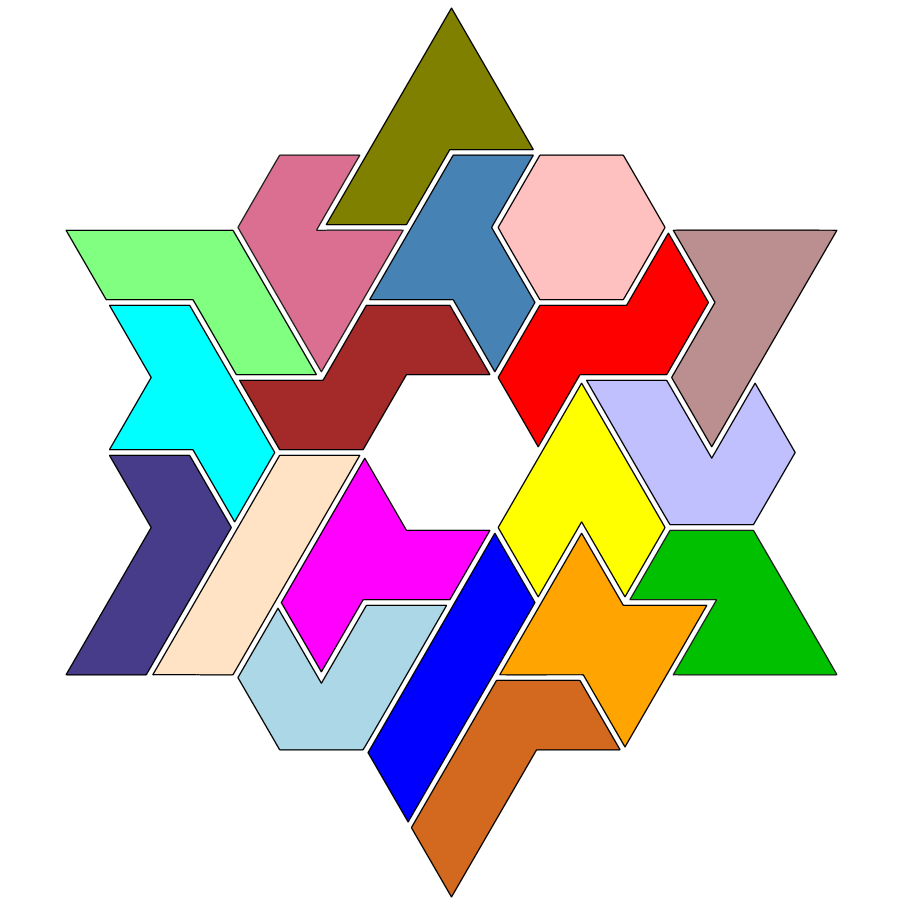
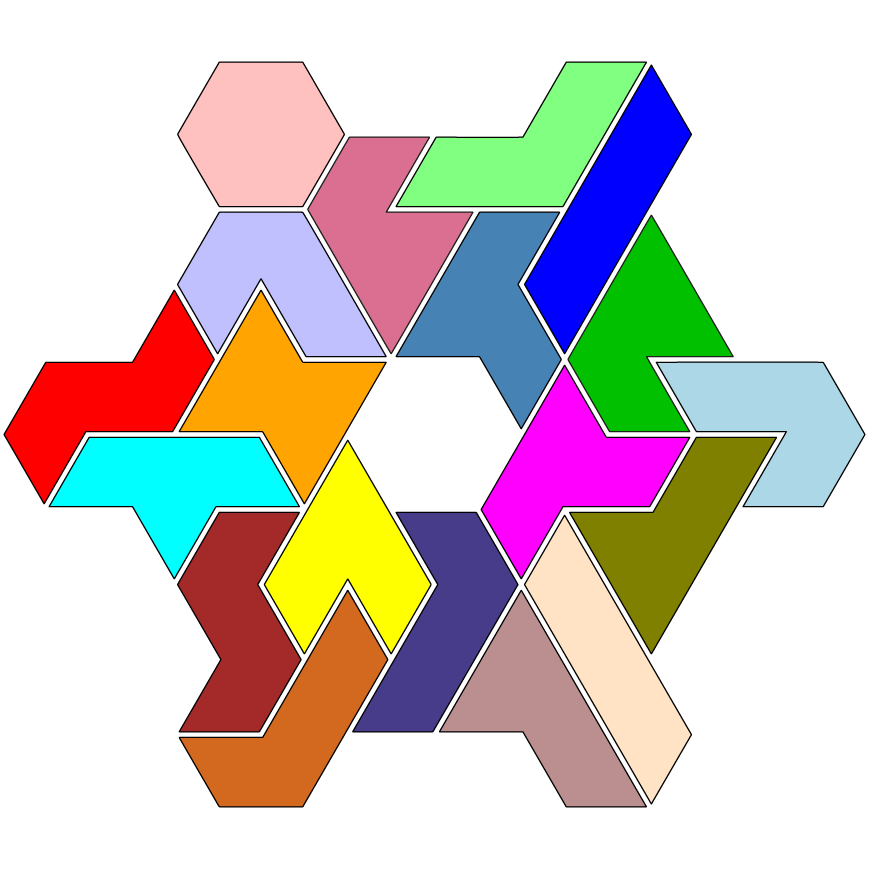
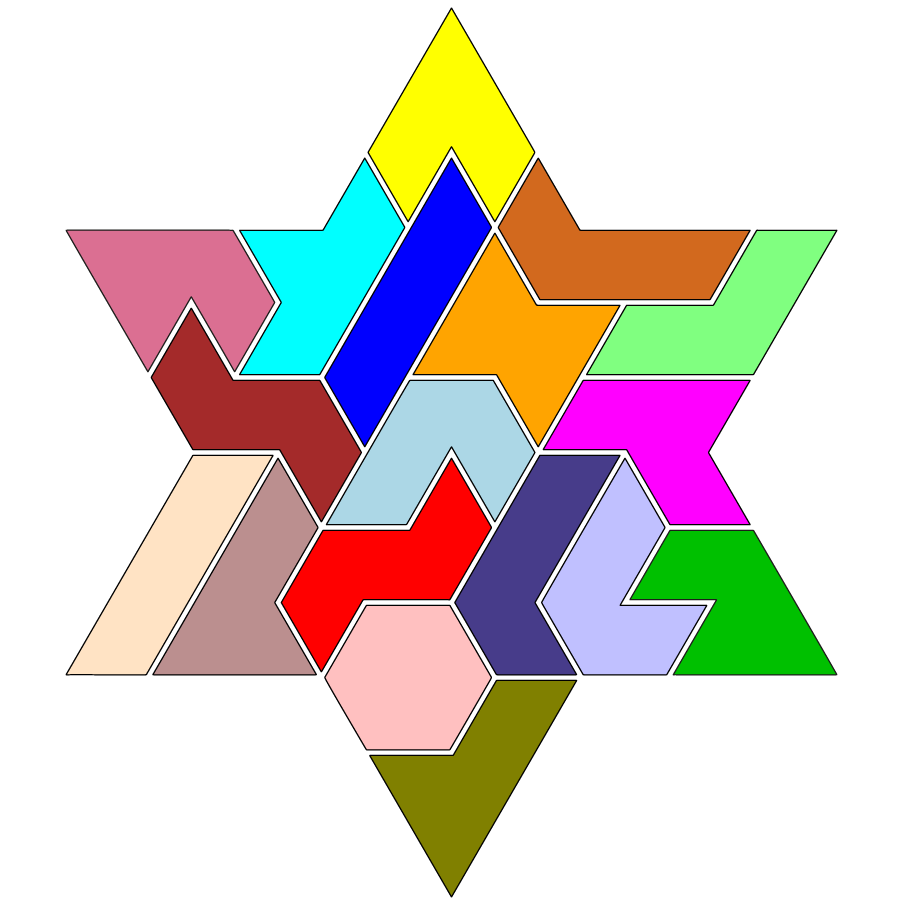
A Hexiamond shape can have at most sixfold rotational symmetry and six axes of reflection. A star made from eight Hexiamonds is one example of a fully symmetrical shape.
Shapes with this maximum symmetry can in fact be made from 4, 7, 8, 9 or 10 Hexiamond pieces.
This is not possible with the regular set of 12 Hexiamonds; none of the possible shapes has full symmetry.
However, several fully symmetrical shapes can be made with the extended set of 19 pieces.
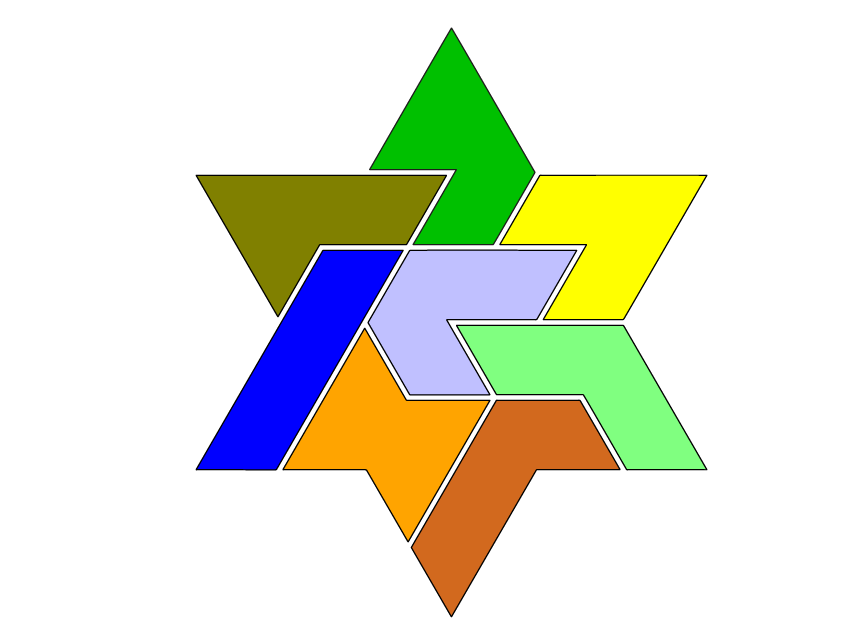
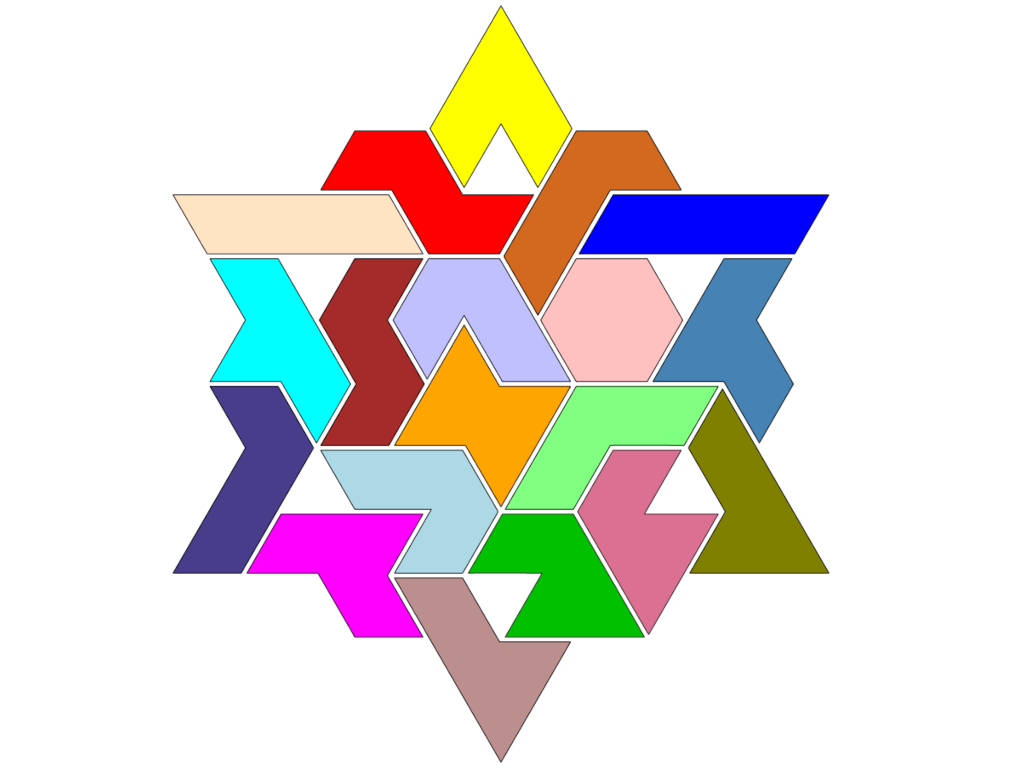
Some Shapes Made from One-sided Hexiamonds
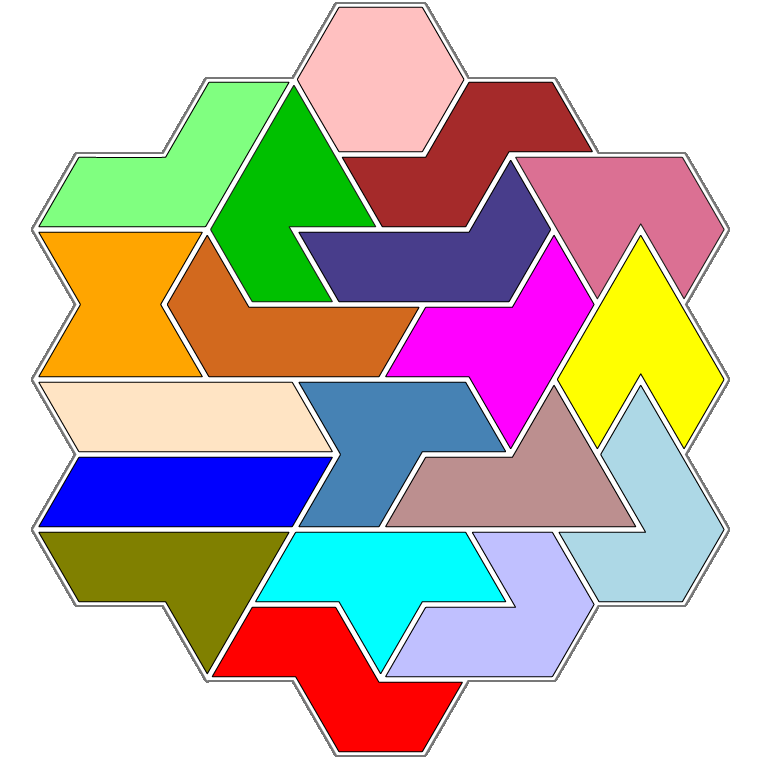
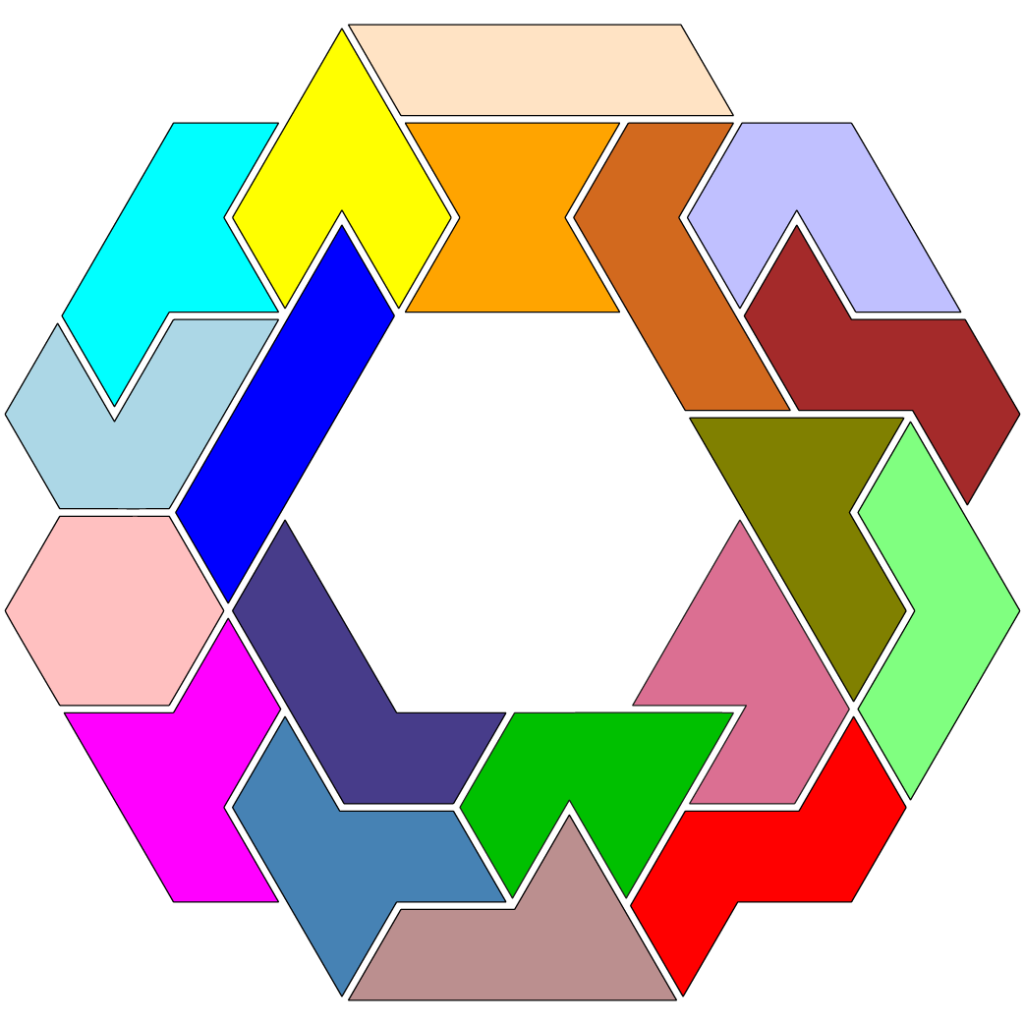
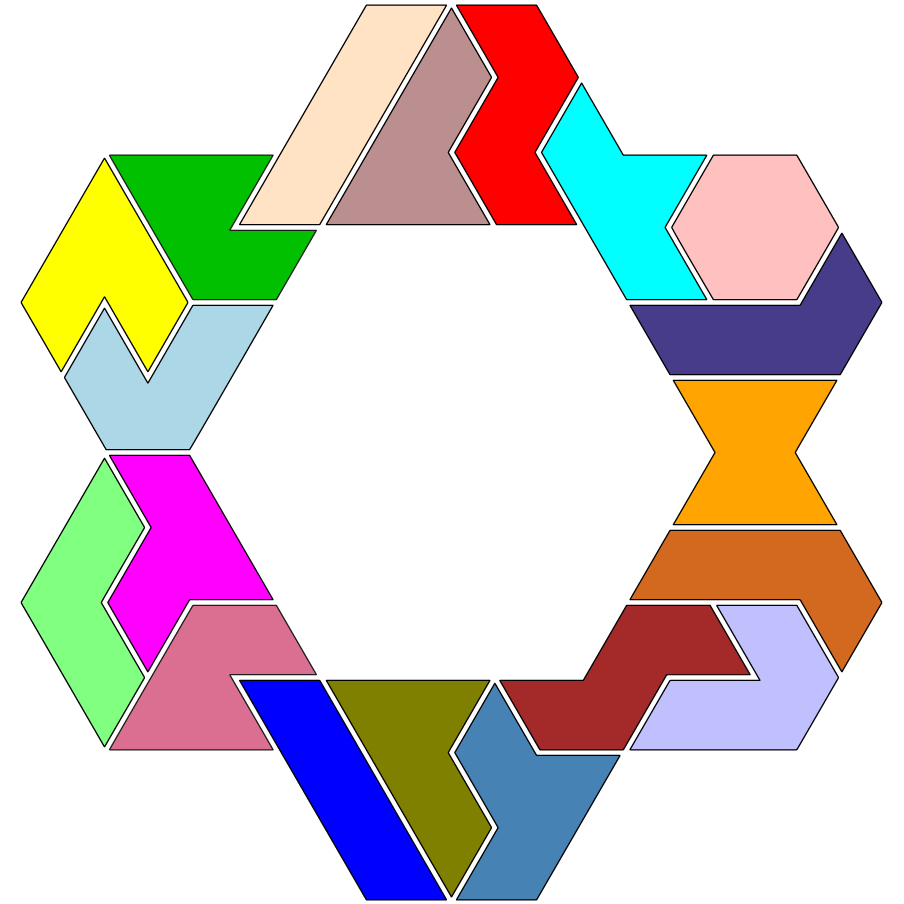
Resources & Downloads
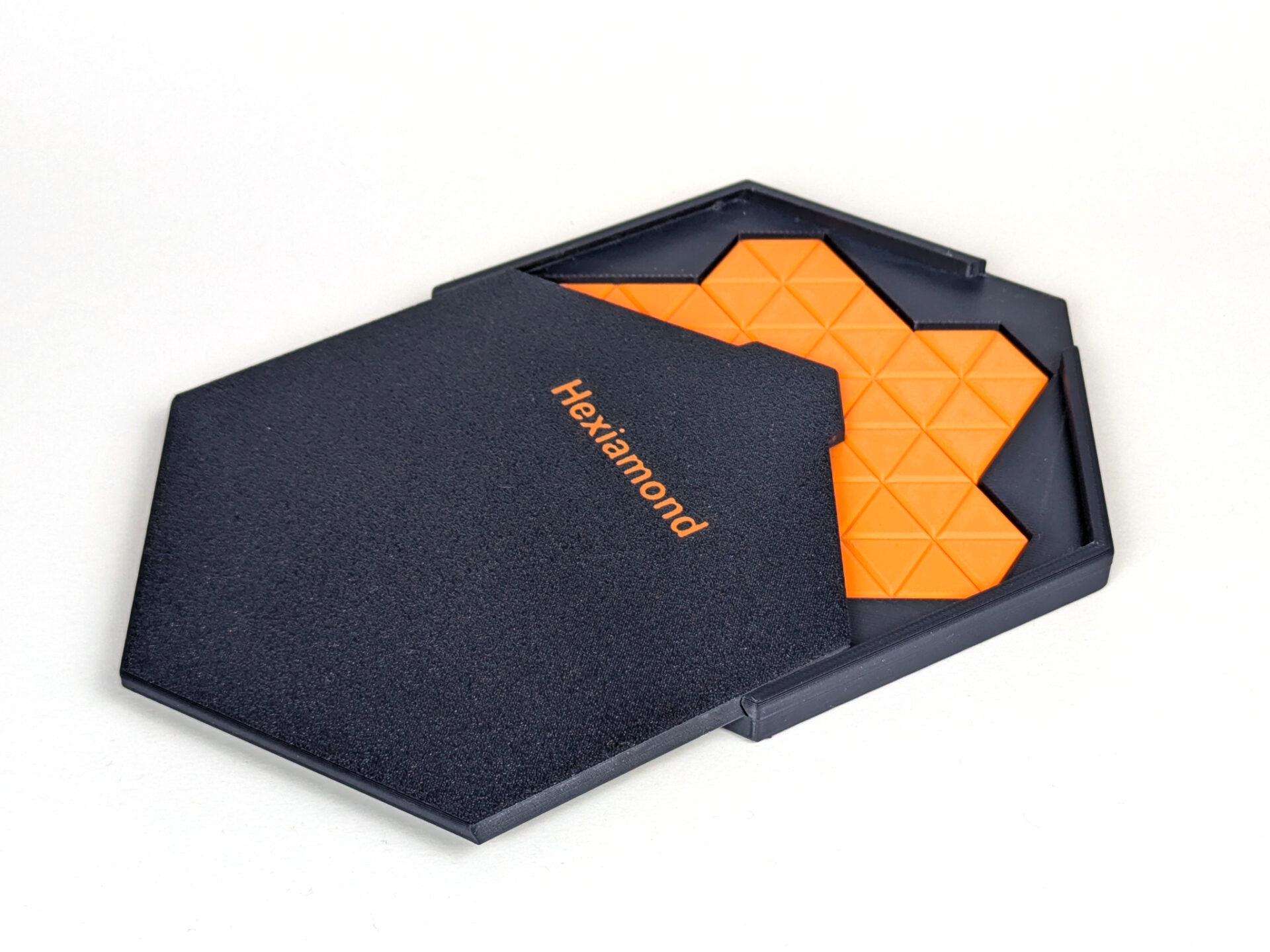
3D-Printing Templates
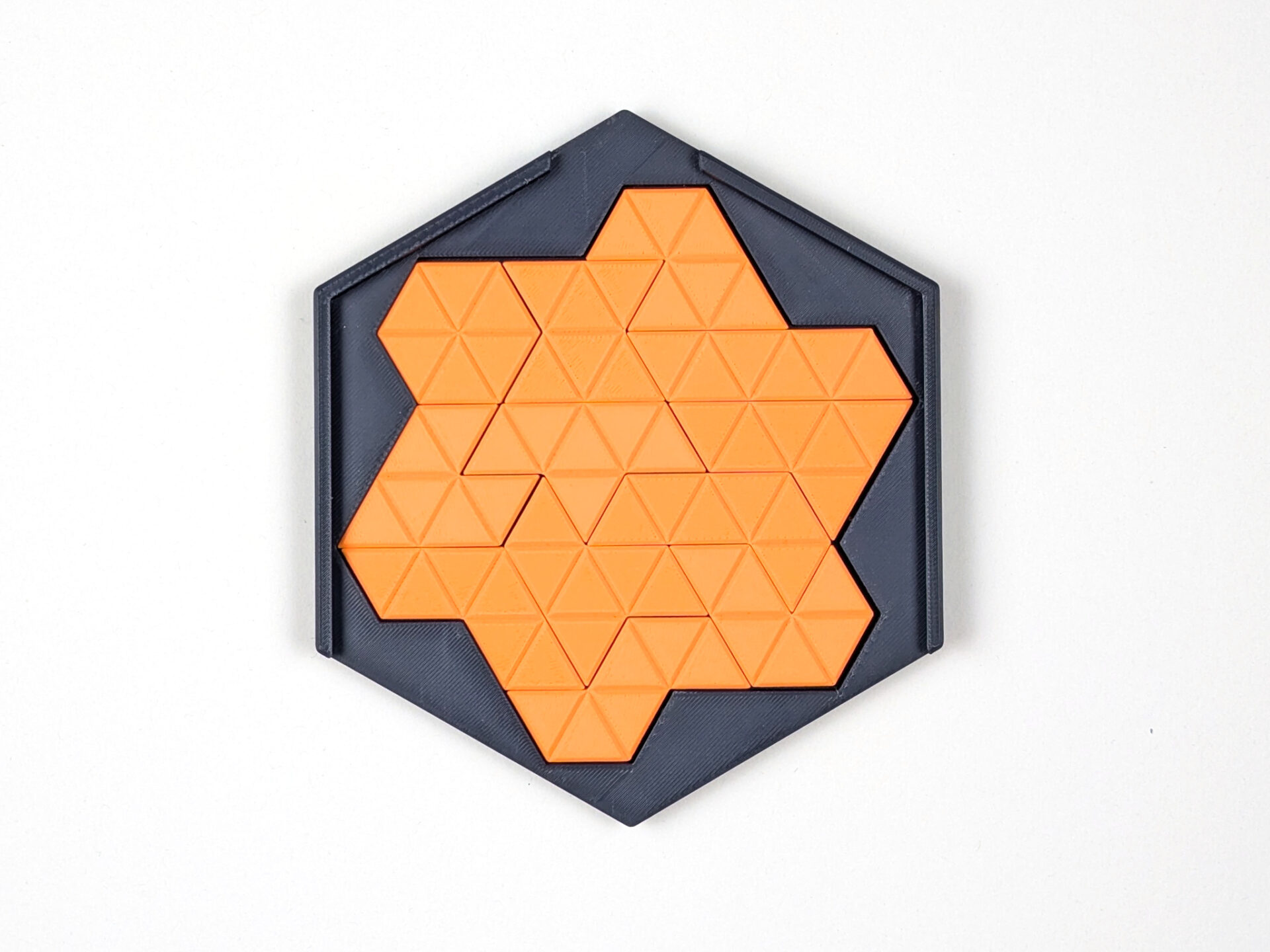
The 3D-printing files for the regular set can also be used to make an extended set of one-sided Hexiamonds.
To distinguish the front from the back, print the pieces in two colors.
With a single-extruder 3D printer, the filament must be changed during printing so that the two sides have different colors.
Online Solver
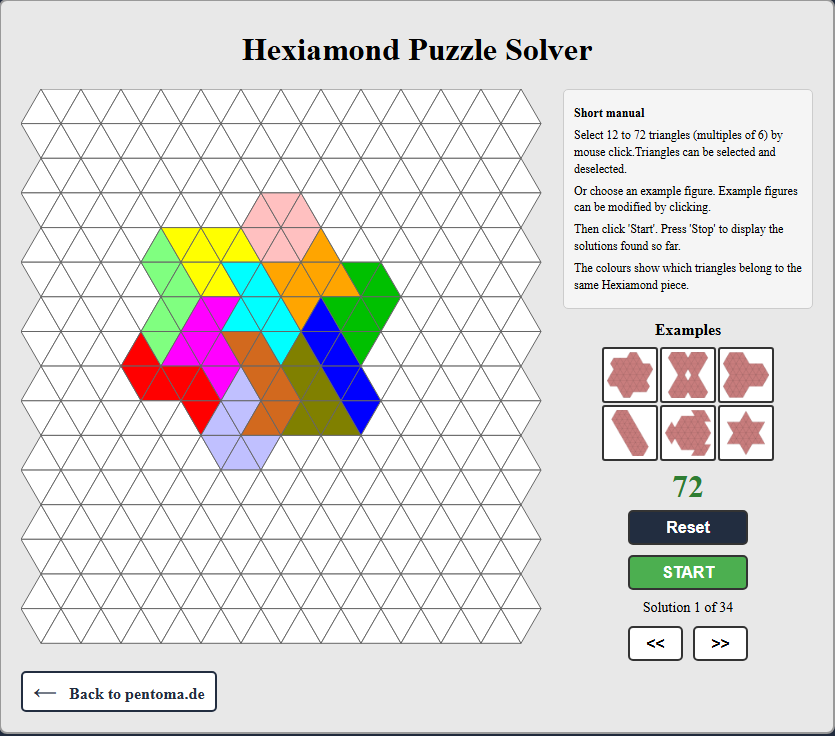
The online Hexiamond solver runs directly in your browser, with no installation or download required. You can create shapes by clicking the pieces and check whether they can be solved.
As well as shapes made from all twelve Hexiamonds, the solver can calculate shapes made from two to eleven pieces.
The solver does not combine solutions that can be transformed into one another by rotation or reflection. Each such solution is counted separately. The interface is in English.
Cardboard Templates
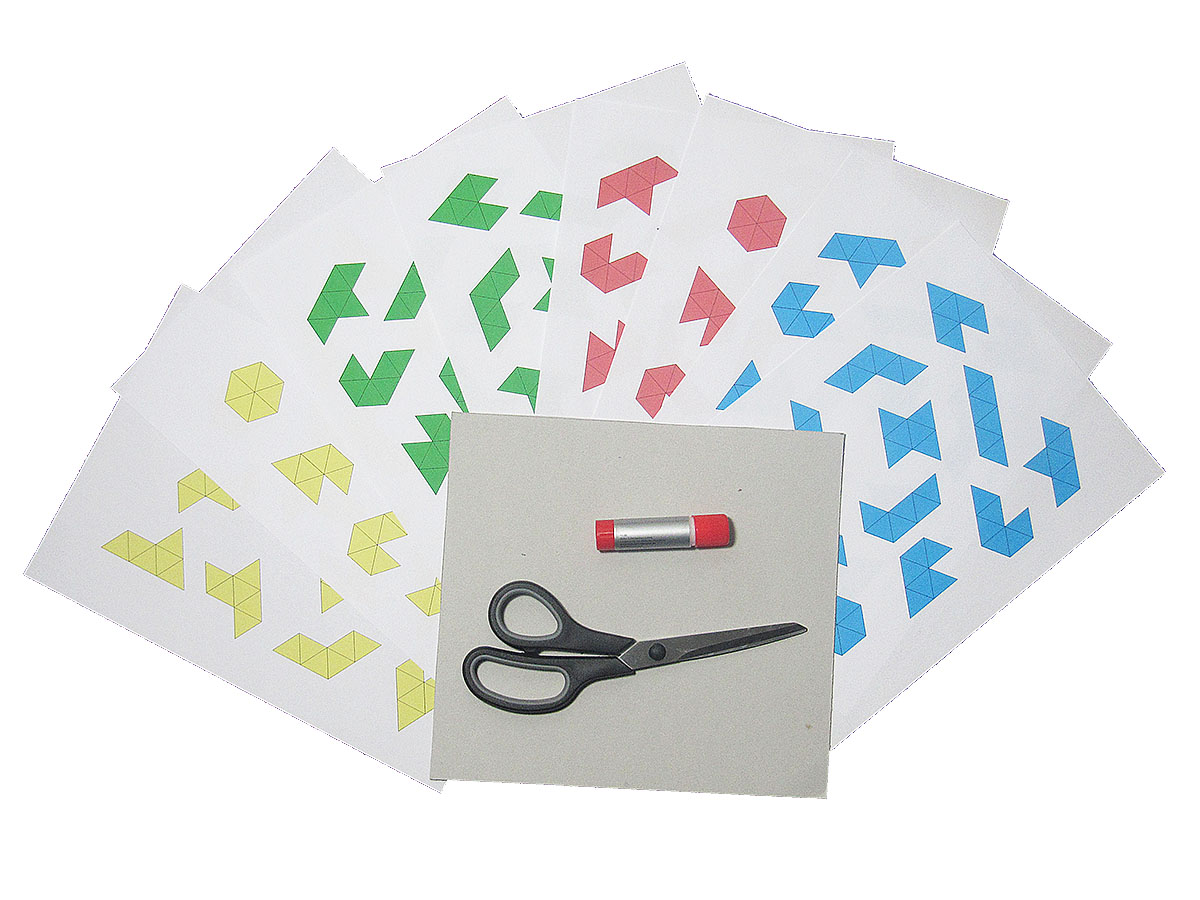
The PDF contains cardboard templates in several colors and instructions for making a Hexiamond puzzle from cardboard. The instructions are available in German and English.
Figure Templates
The figure templates are designed to match the cardboard templates. When using them with 3D-printed Hexiamonds, scale the templates to 90%.