Tri- and Tetrahex pieces
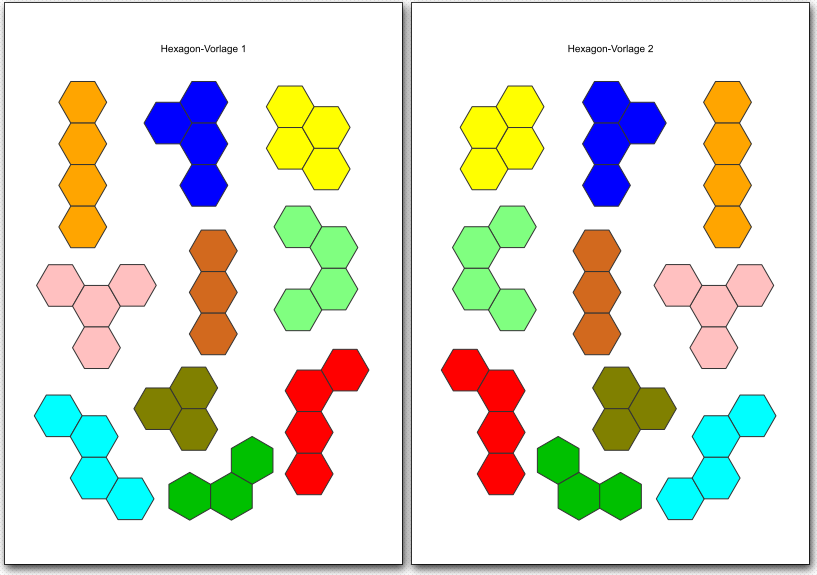
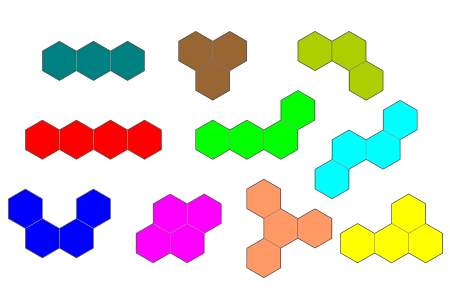
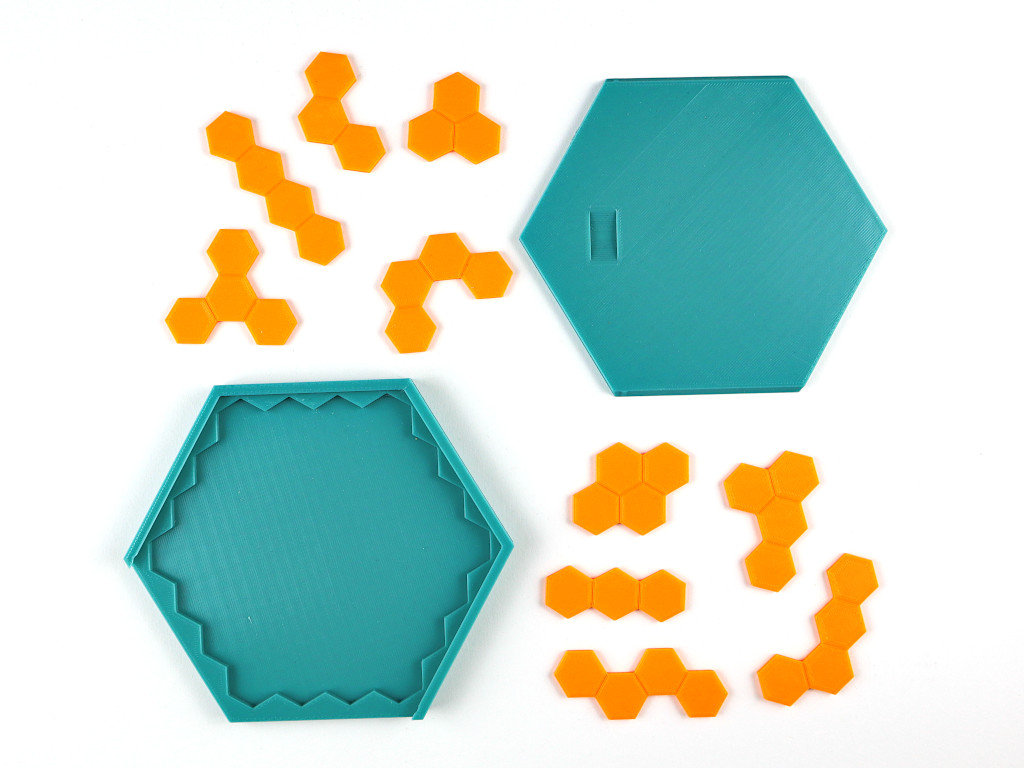
By combining three regular hexagons, you obtain trihexes. The tetrahexes consist of four connected hexagons.
There are three trihexes and seven tetrahexes. They belong to the family of polyhexes.
Puzzles made from Trihexes and Tetrahexes
There are exactly three regular polygons – that is, polygons with equal side lengths and equal interior angles – that can tile a plane, meaning they can cover it completely without gaps or overlaps: the square, the equilateral triangle, and the regular hexagon.
Just as pentominoes were derived from the square and hexiamonds from the equilateral triangle, it was natural to develop a corresponding puzzle from regular hexagons as well: a puzzle made from so-called polyhives.
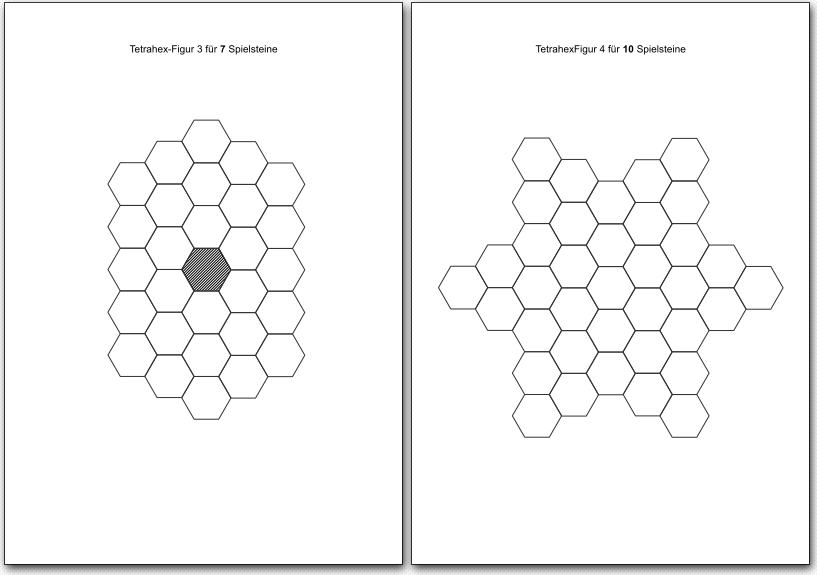
The seven tetrahex pieces together form an area of 28 hexagons. When supplemented by the three trihex pieces, the result is 37 cells for a complete set of ten pieces. On the Tetrahex shape page, you can find several examples of shapes that can be formed using the tetrahexes.
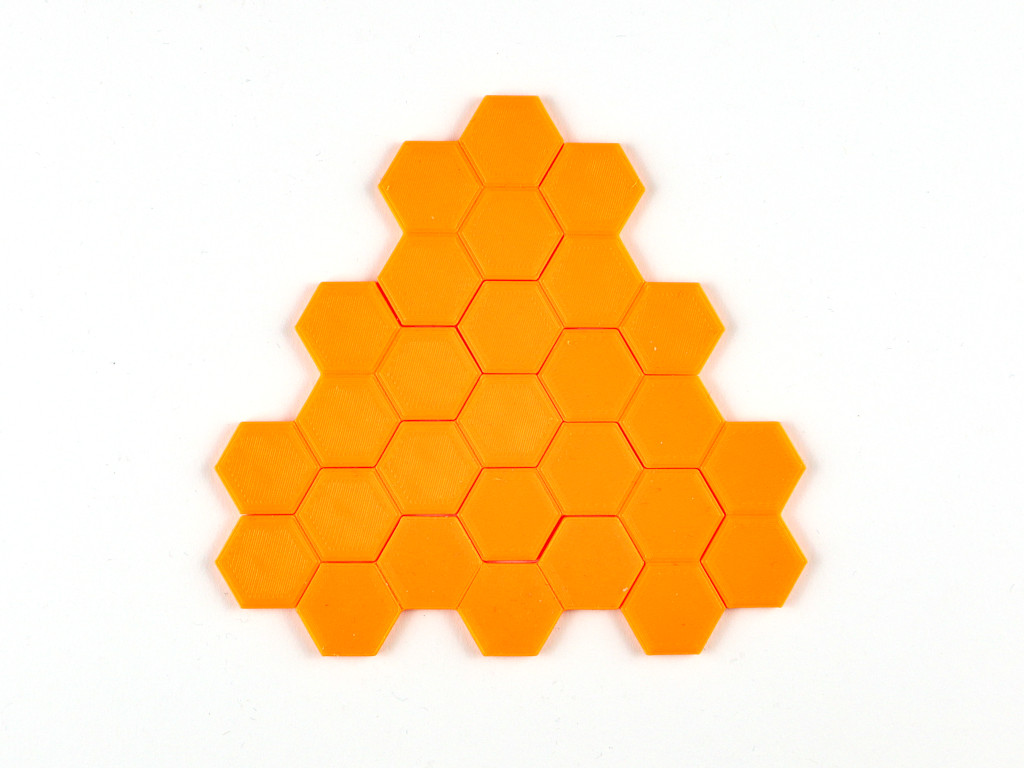
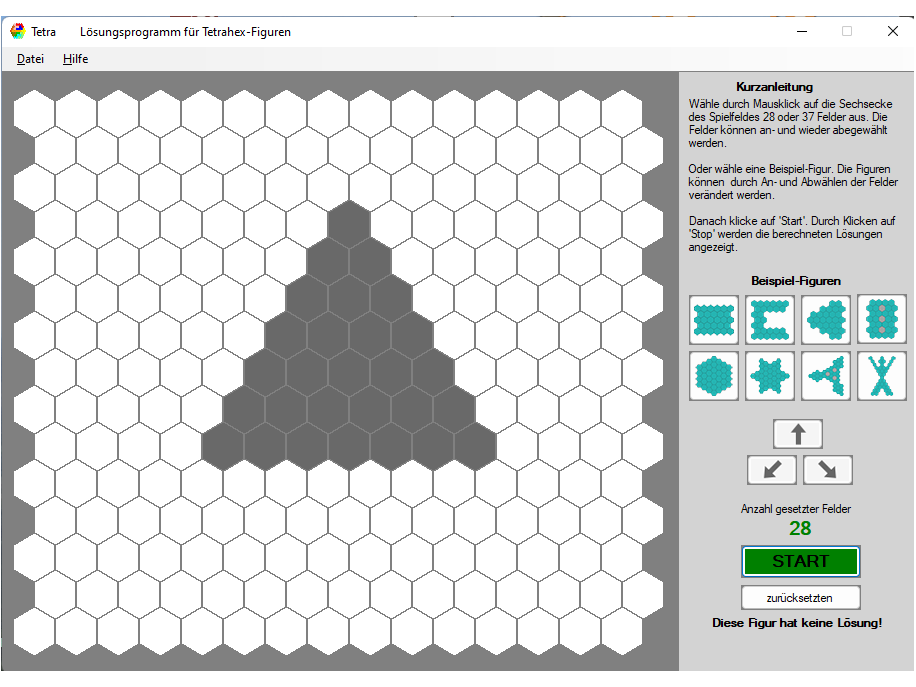
The underlying honeycomb grid allows for six axes of reflection and six axes of rotation (that is, maximal symmetry). However, if you restrict yourself to the seven tetrahexes, there is no shape with maximal symmetry – even an equilateral triangle (as shown) cannot be formed with them.
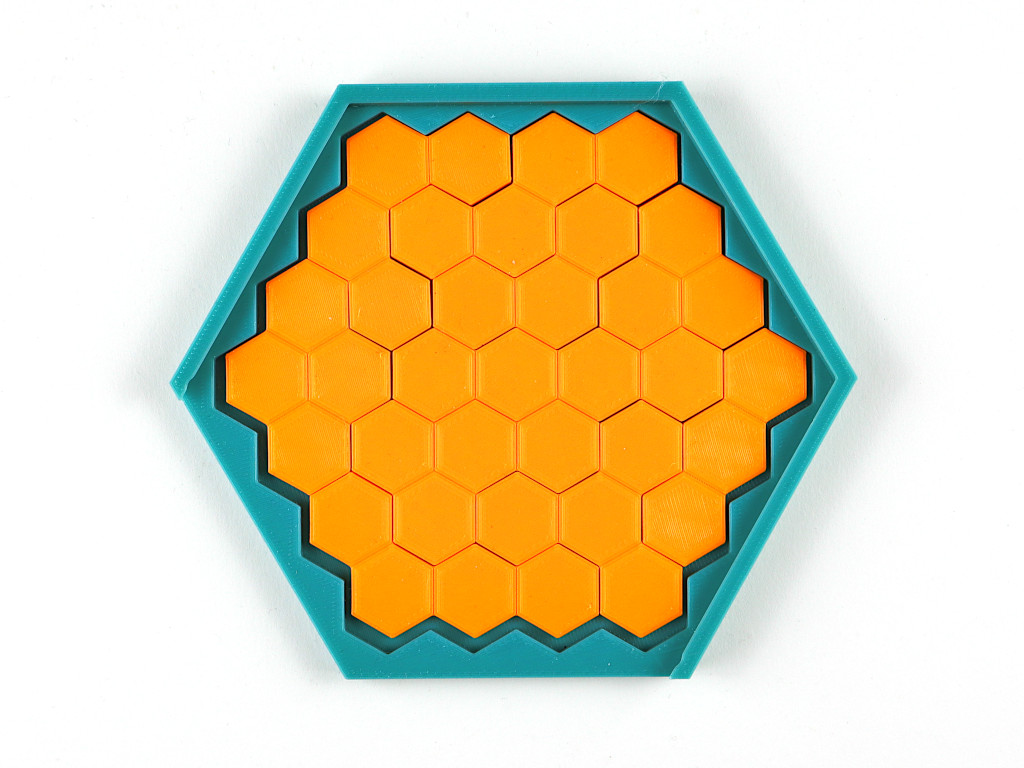
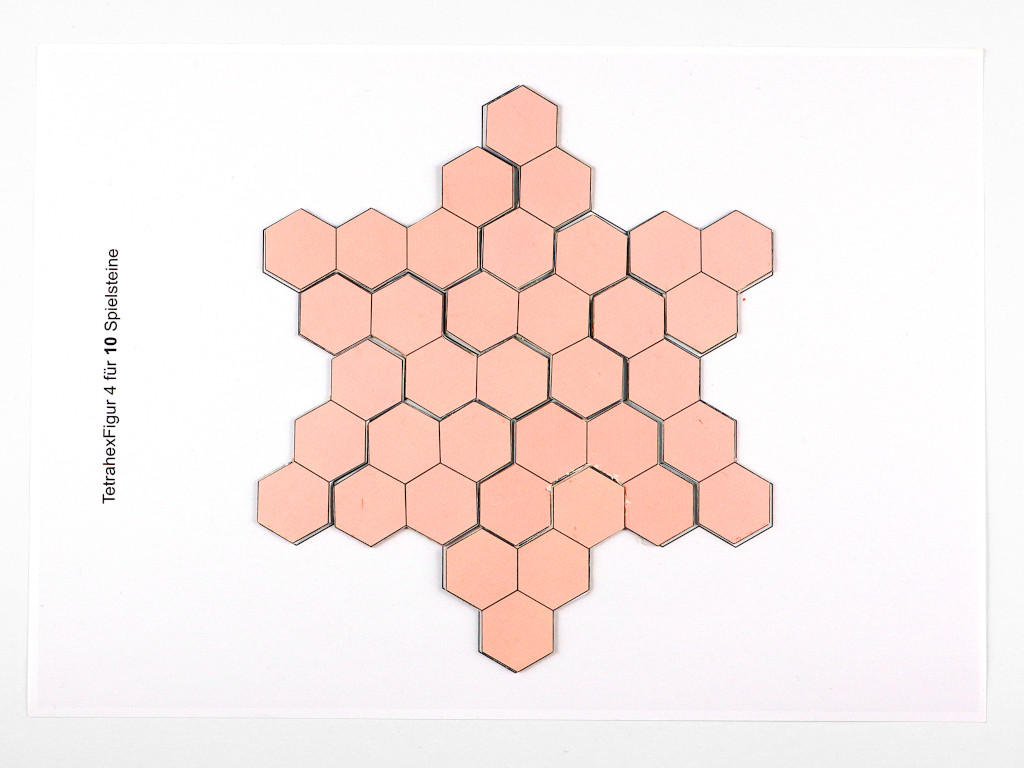
If you extend the set by adding the three trihex pieces, at least two shapes with maximal symmetry exist: a hexagon and a “snowflake.” These are presumably the only shapes with this property.
Resources & Downloads
3D Printing Templates
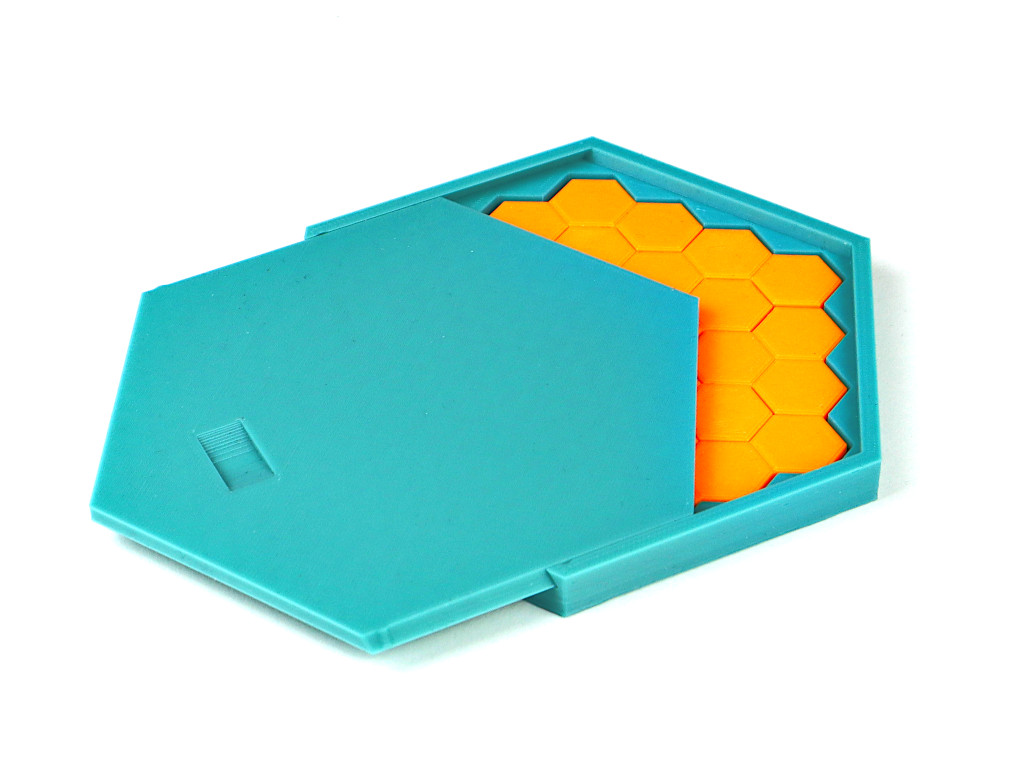
The 3D-print templates include the three trihexes, the seven tetrahexes, and a slider box.
Online Solver program

The online Tetrahex solver runs directly in your browser – no installation and no download required. Shapes can be assembled easily with a mouse click and then solved.
Shapes can be constructed and solved that consist either of the 7 Tetrahex pieces (7 × 4 = 28 cells) or of 7 Tetrahex and 3 Trihex pieces (7 × 4 + 3 × 3 = 37 cells).
The computed solutions are listed without symmetry reduction – solutions that can be transformed into one another by rotation or reflection are counted as separate solutions.
Solver program
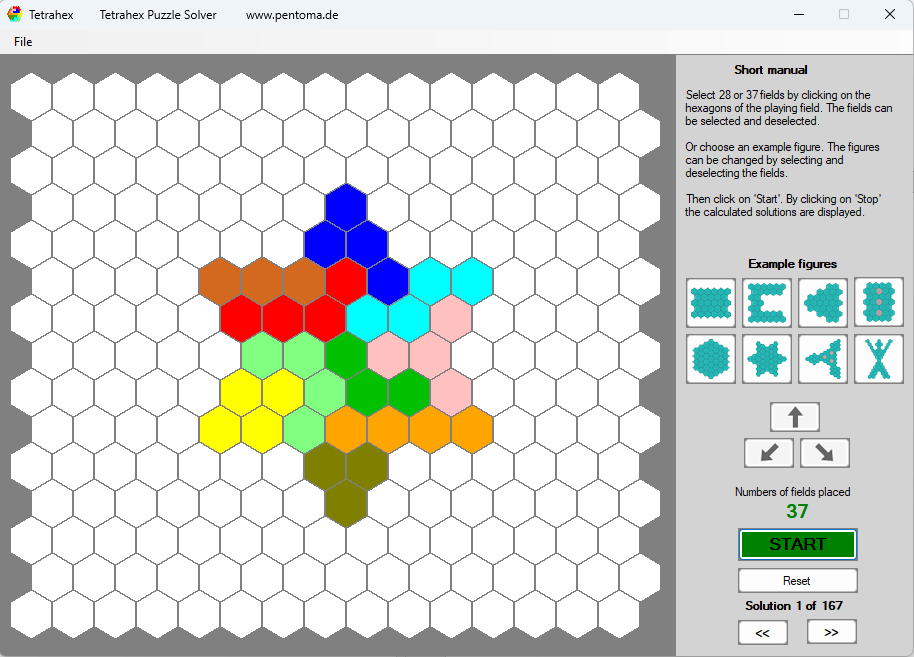
The Tetrahex Puzzle solver is part of a program collection available for download on Itch.io. It is for Windows only.
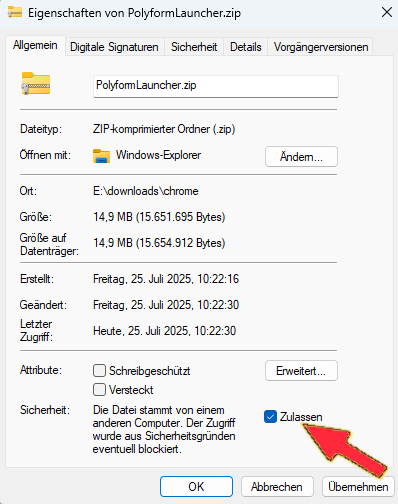
IMPORTANT: For a correct installation, please read the Instructions before unpacking!
Crafting Templates
Download multi-colored crafting templates for cardboard tetrahex pieces
shape templates matching the crafting templates