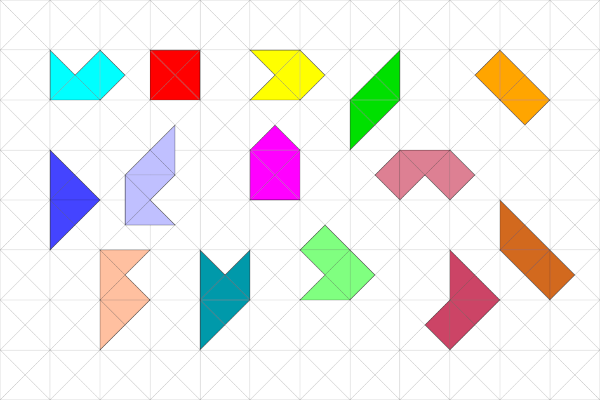
TetraPentatans – The Pieces
TetraPentatans – a Puzzle Based on Right Isosceles Triangles
The TetraPentatans belong to the family of Polytans (also known as Polyabolos). They consist of four or five right isosceles triangles, each touching either cathetus-to-cathetus or hypotenuse-to-hypotenuse. Connections between a cathetus and a hypotenuse are not permitted.
In contrast to the Tetratans shown on the Tetrabolo puzzle page, the forms presented here satisfy an additional requirement: they fit into the illustrated grid — in other words, they are grid-conforming.
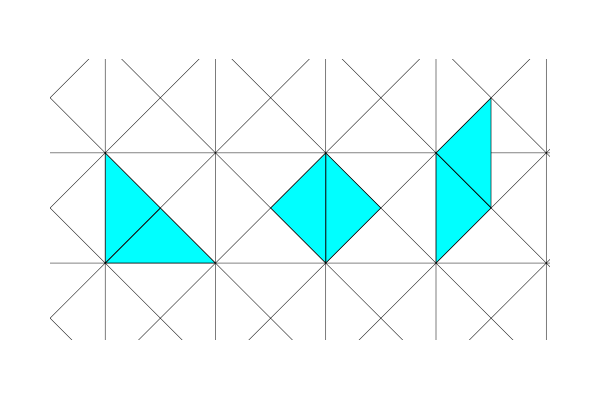
What this means is illustrated in the following figure using the example of the Ditans: of the three shapes shown, only two are grid-conforming, because only these fit entirely into the displayed grid.
If one additionally requires that the Polytans fit into the Tan grid, one obtains:
2 Ditans, 2 Tritans, 6 Tetratans, 8 Pentatans, 22 Hexatans, 42 Heptatans, 112 Octotans.
TetraPentatans-Puzzles
3D-printed Puzzles
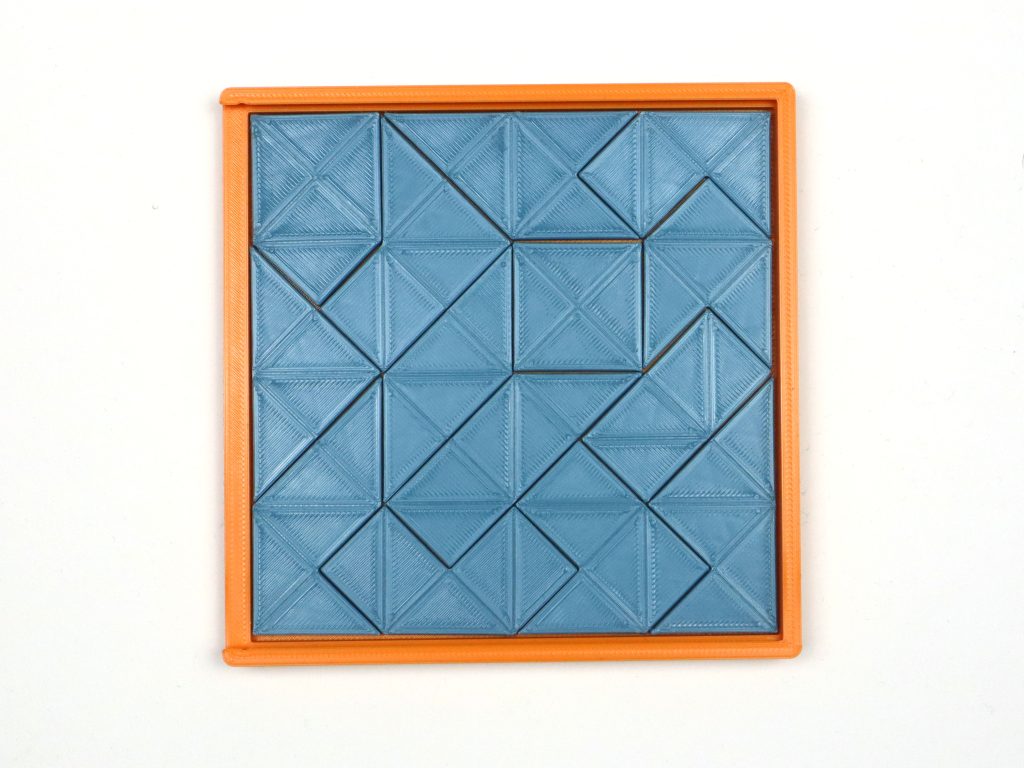
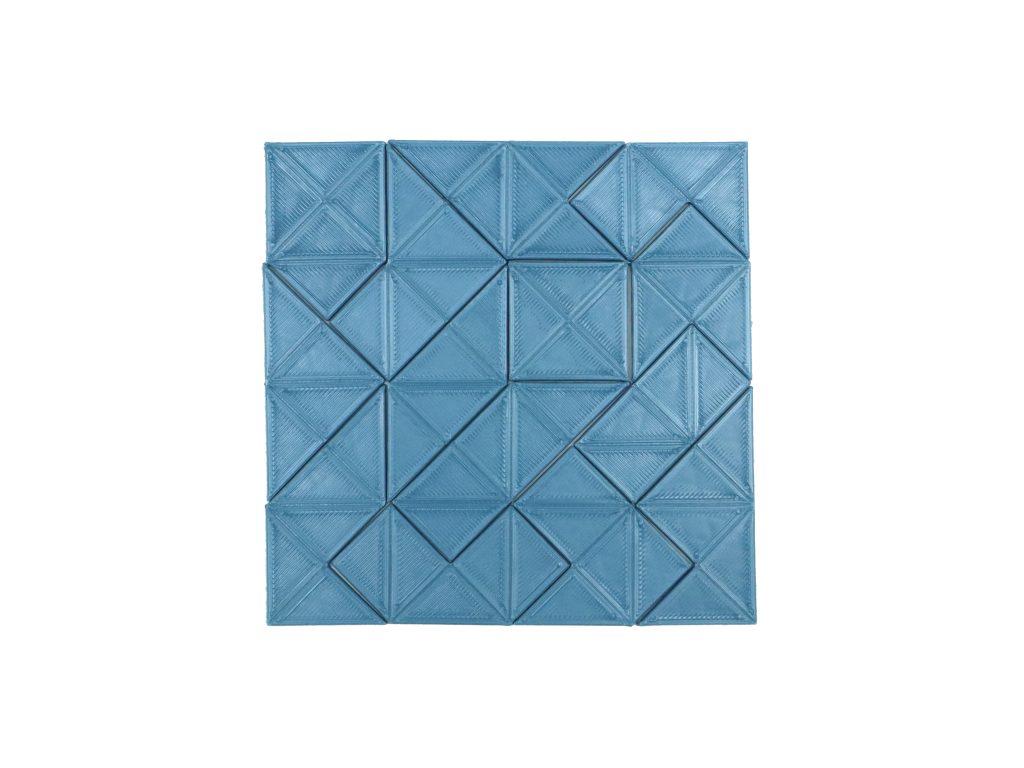
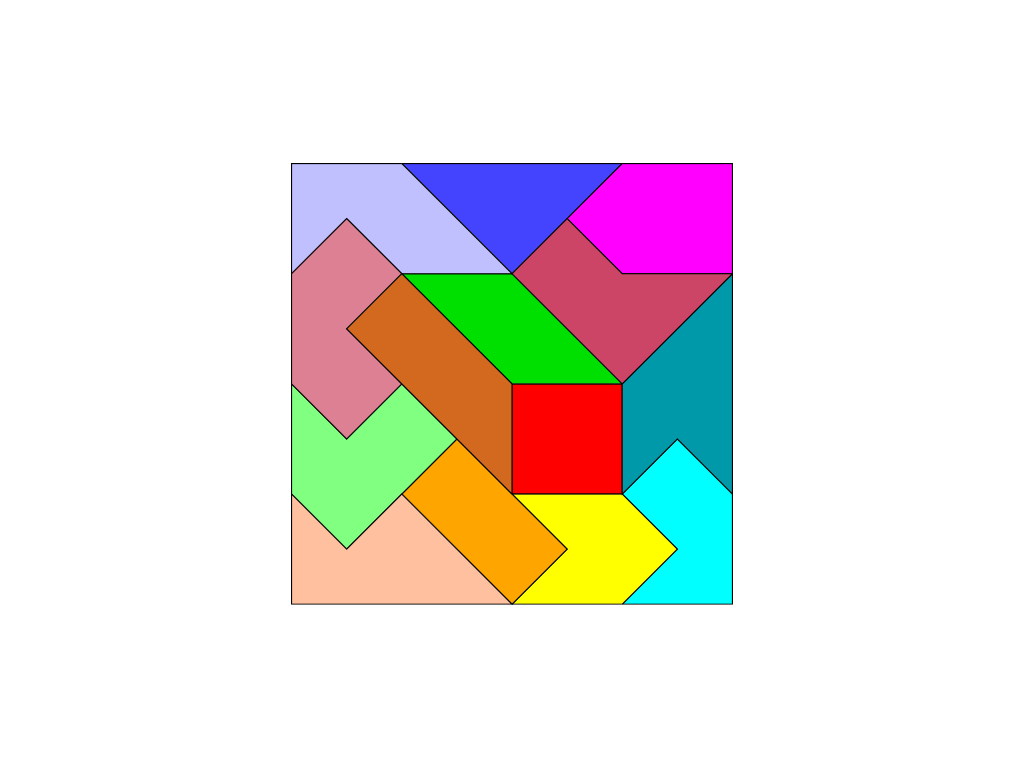
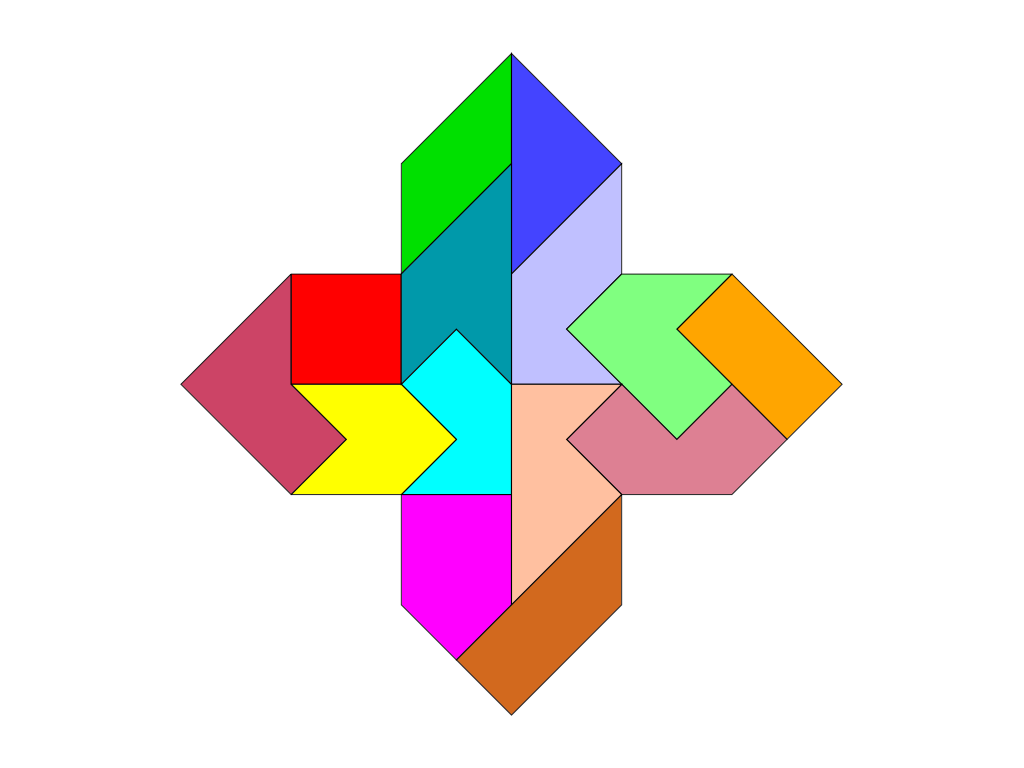
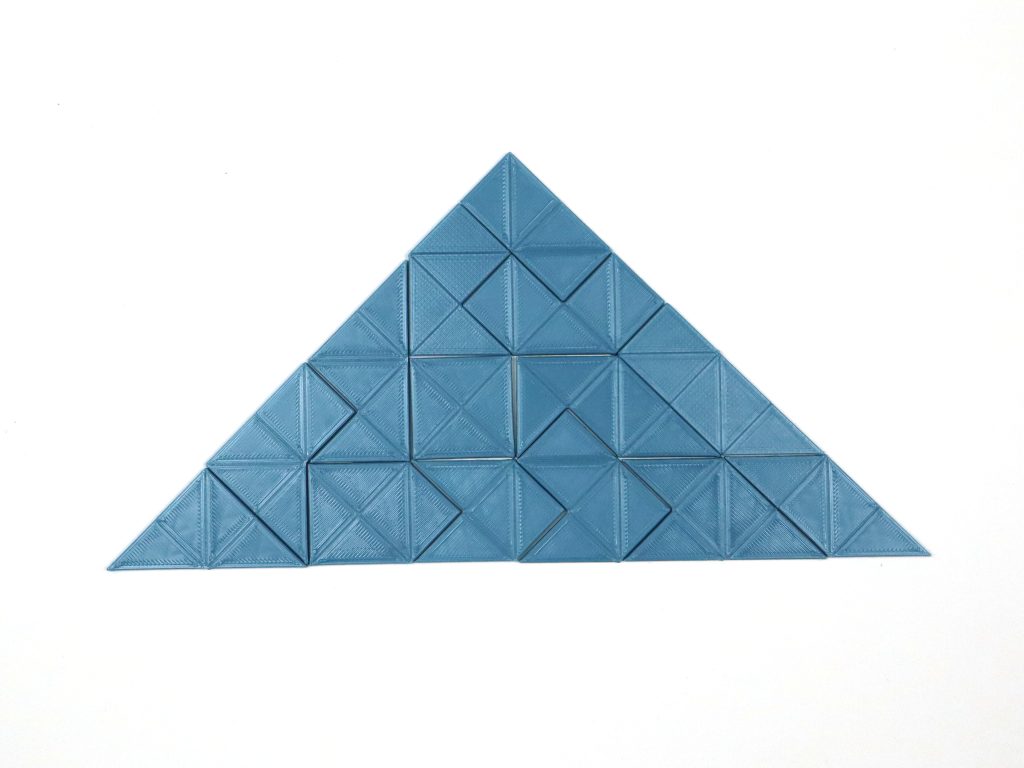
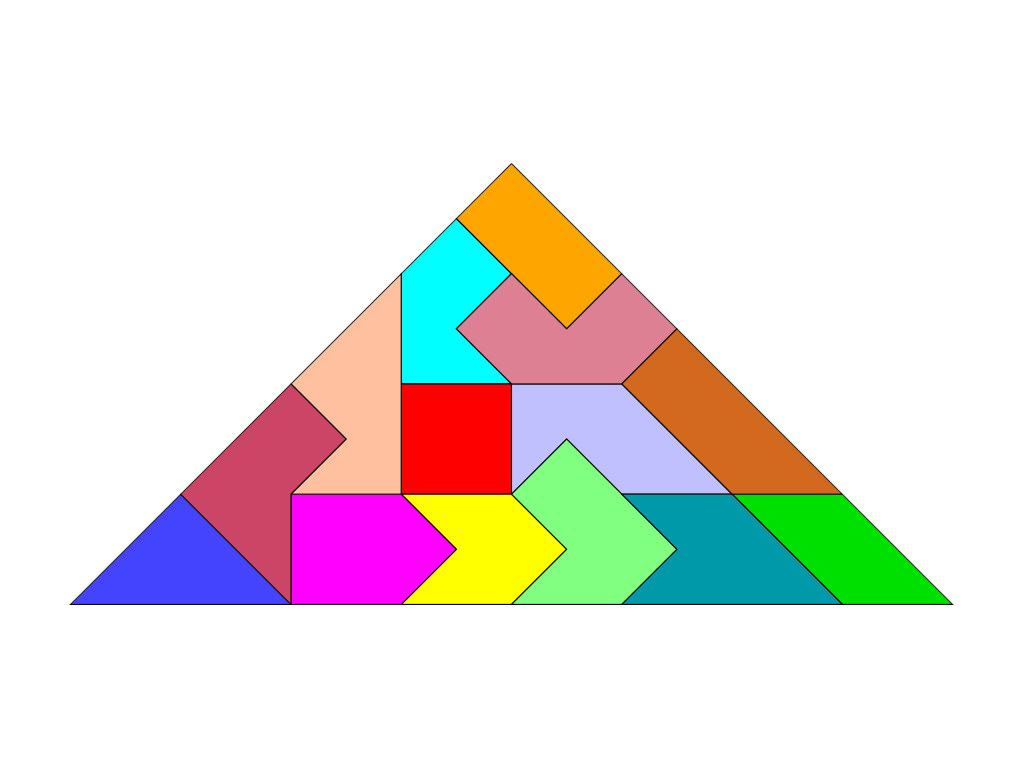
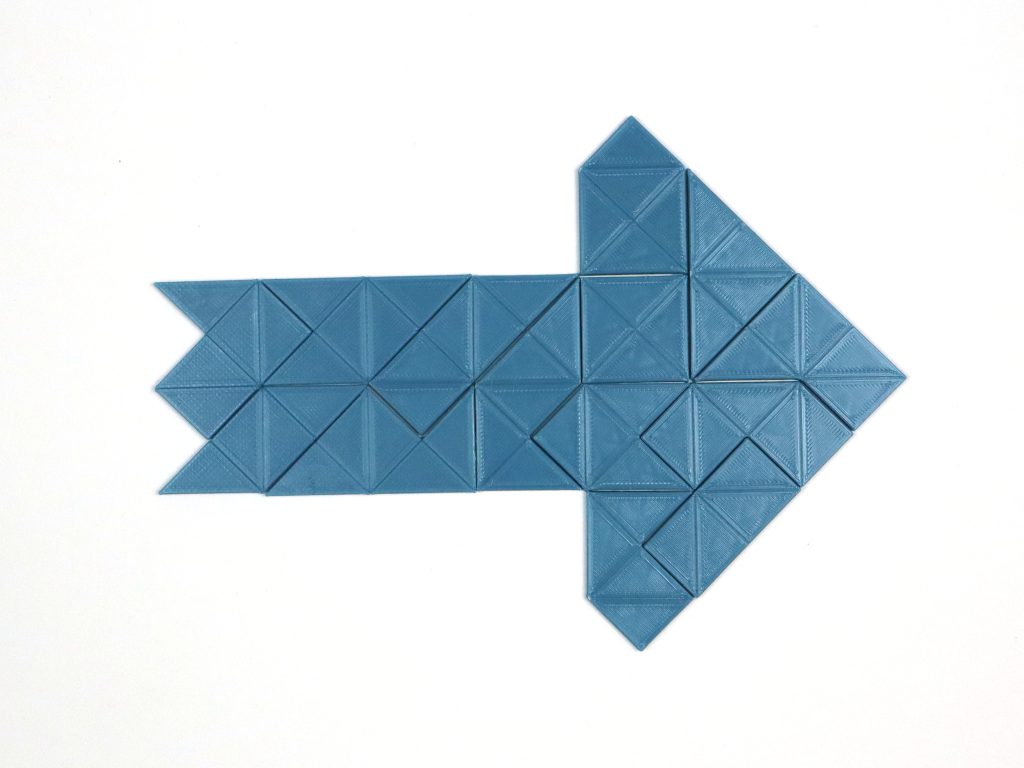
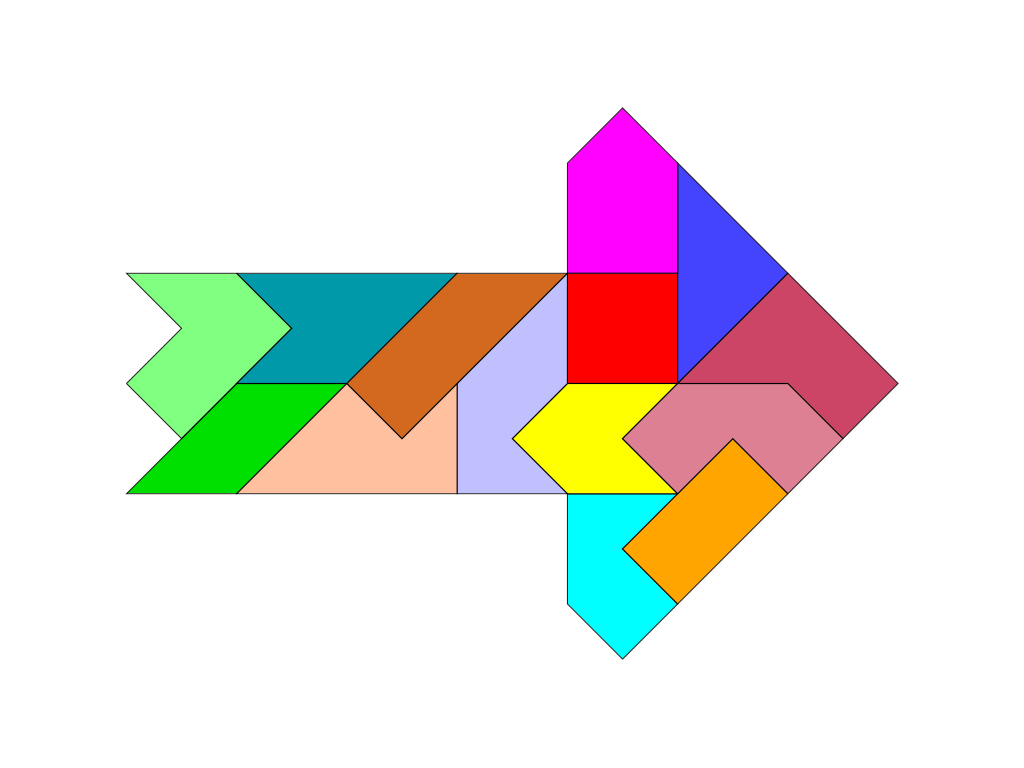
The 6 Tetratans and 8 Pentatans together consist of 64 right-isosceles triangles. A wide variety of symmetrical shapes can be created from these pieces – including a perfect square.
The 3D puzzle available in the download section is based on a square shape composed of all 14 pieces. It has 133 distinct solutions – and it is not easy to solve.
Some TetraPentatan-Shapes

Grid Conformity and Solver Tools
Grid Conformity
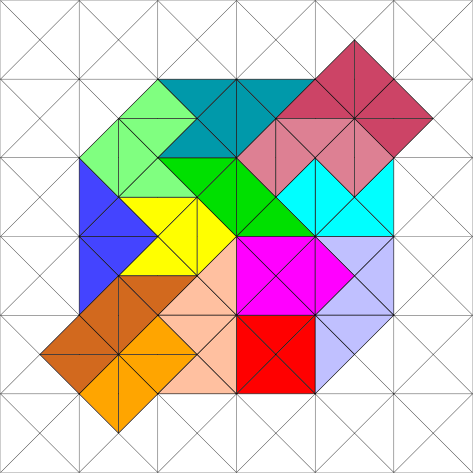
The fact that each of the pieces can be fitted into the Tan grid does not necessarily mean that they will behave in a grid-conformant way in every solution.
As the following illustrations show, the Tetra- and Pentatans strictly follow the grid structure in some solutions, while in others they exhibit grid jumps, where the pieces leave the predefined grid arrangement.

Video on non-grid-conforming solutions in the Polysolver solution program
For creating the puzzle pieces and for finding figure solutions, the program Polysolver was used. It offers the option to generate the Tetra- and Pentatans automatically. However, these automatically generated pieces lead exclusively to grid-conforming solutions.
To obtain all possible solutions — including those with grid shifts — the puzzle pieces must be created manually and defined at double size. How this works in detail is demonstrated in the linked YouTube video.
Resources & Downloads
3D Print Templates
The 3D-print templates consist of 6 Tetratans and 8 Pentatans and a sliderbox.