3D Pentominoes – The Pieces
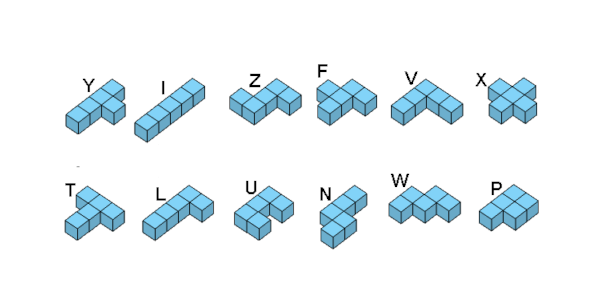
The term “3D Pentominoes” is commonly used, but is mathematically imprecise: pentominoes are two-dimensional shapes made of five edge-connected squares. The pieces shown here are pentacubes, each made of five cubes. Of the 29 distinct pentacubes, twelve are flat and correspond to the classic pentominoes.
This page focuses on three-dimensional shapes and puzzles made from these pieces. The two-dimensional pentomino shapes are covered on the Pentomino 2D page.
3D Pentomino Puzzles
Where to Find Them and How to Make Them
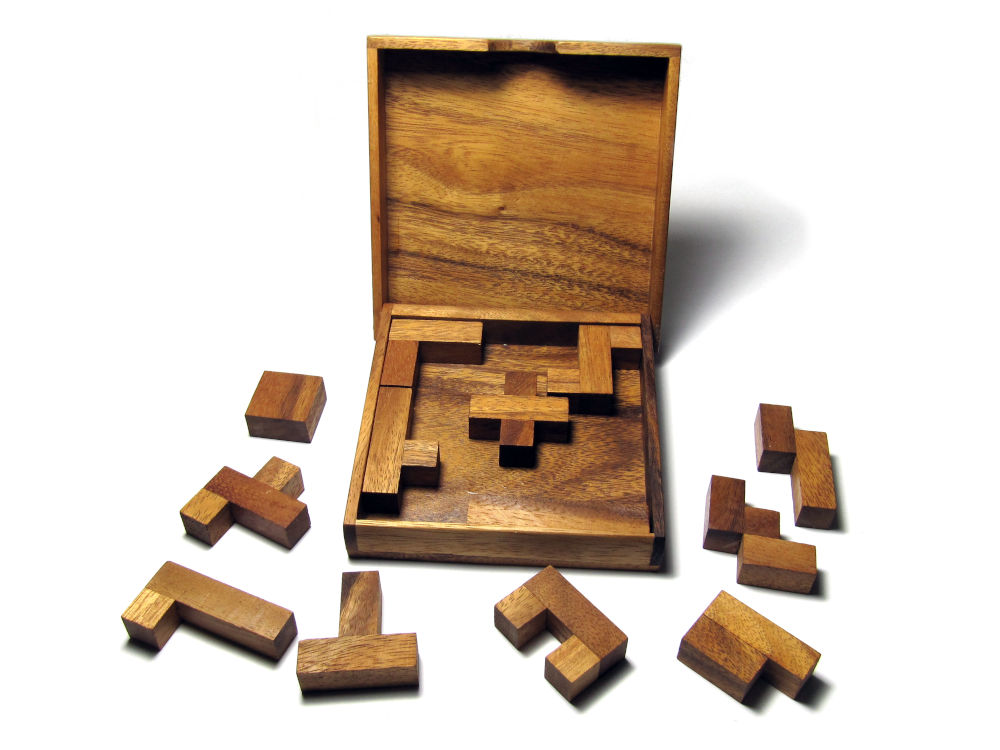
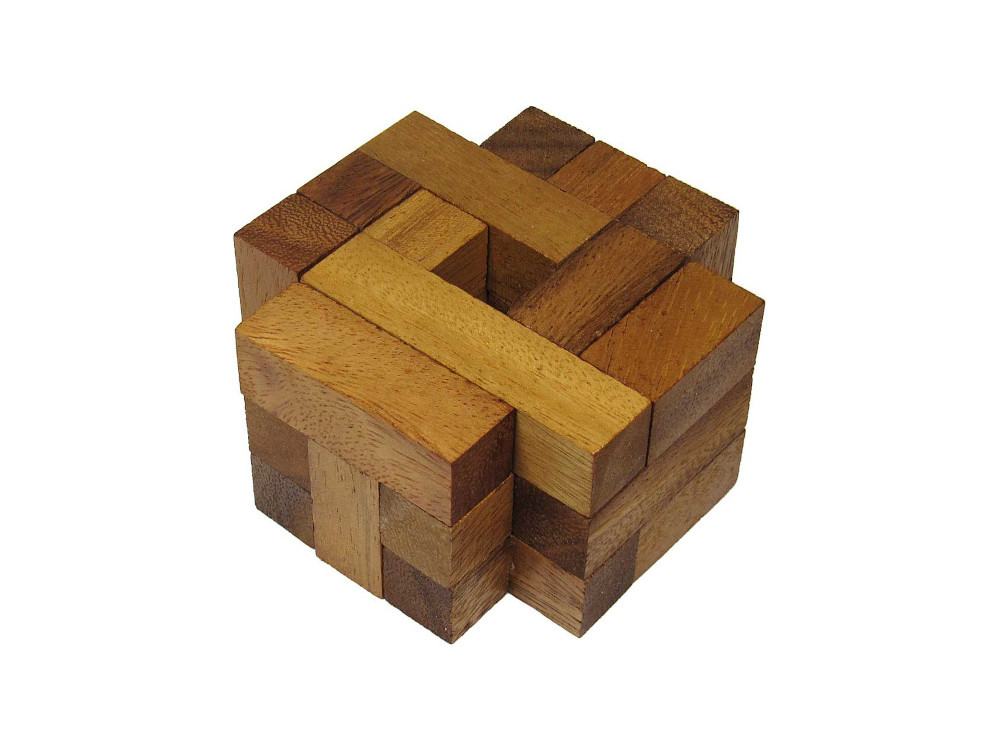
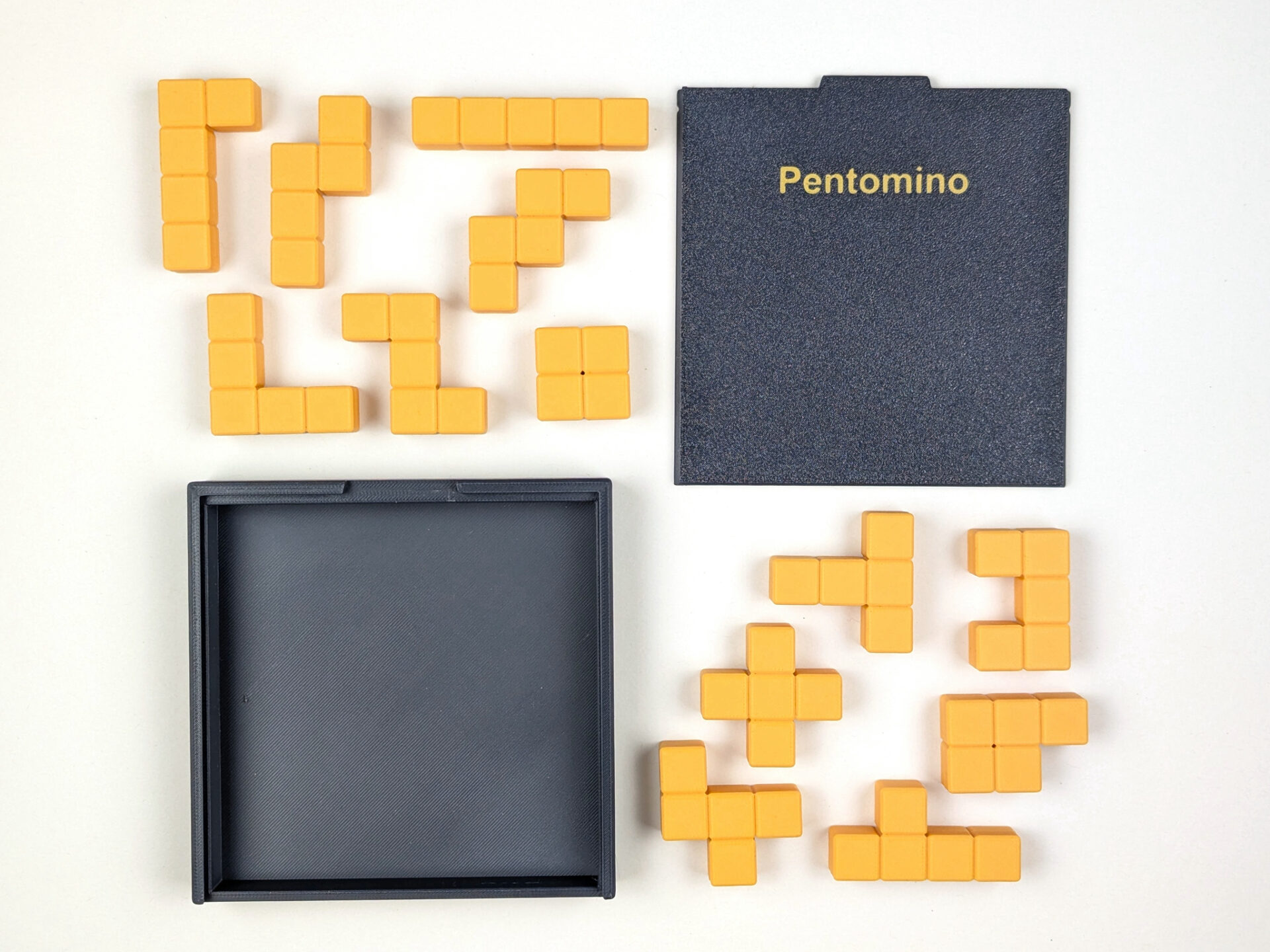
Pentomino puzzles are commercially available in different versions. You can also make them from wooden cubes or 3D-print them. The relevant 3D-printing files are linked in the “Resources & Downloads” section. The twelve pieces can also be used to make two-dimensional shapes.
Shapes and Solvers
Many different shapes can be made with the 3D pentominoes. A selection is shown on the Pentomino 3D Shapes overview.
The desktop version of the solver can also solve Pentomino shapes with a checkerboard pattern.
Pentominoes with a Checkerboard Pattern
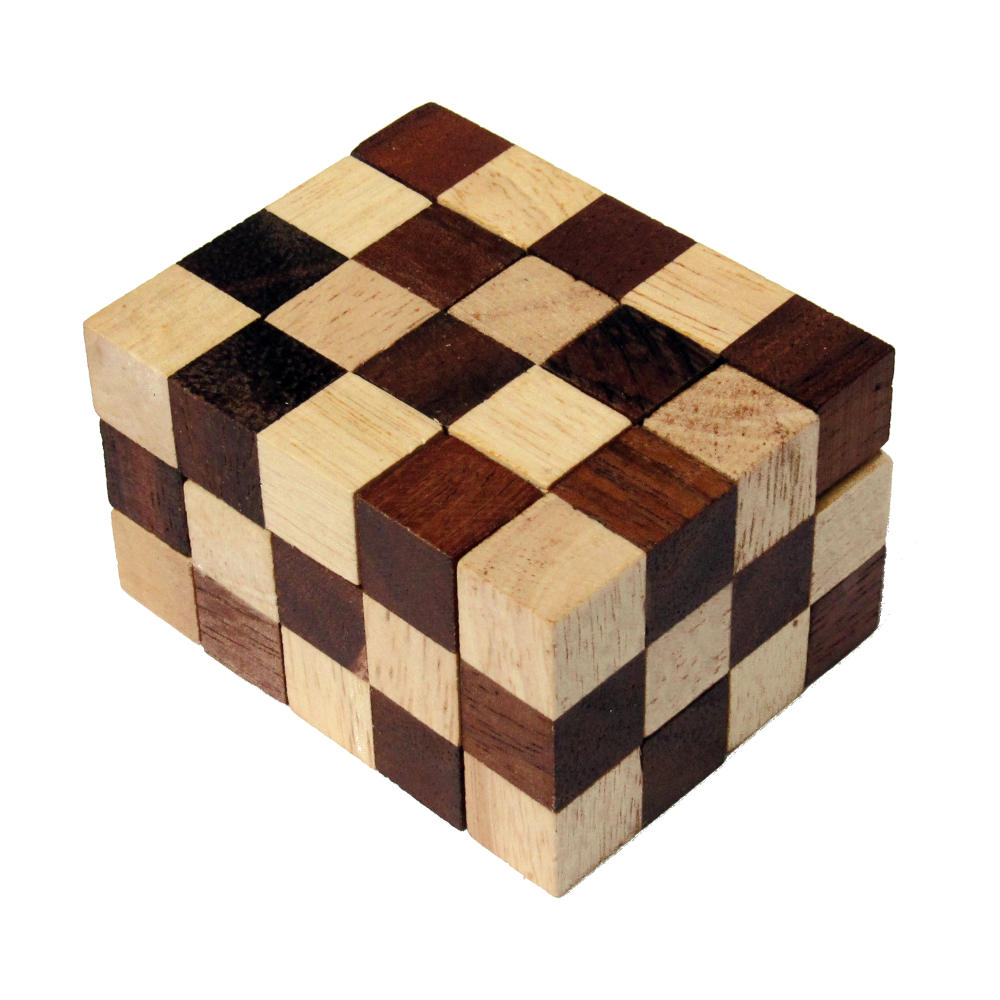
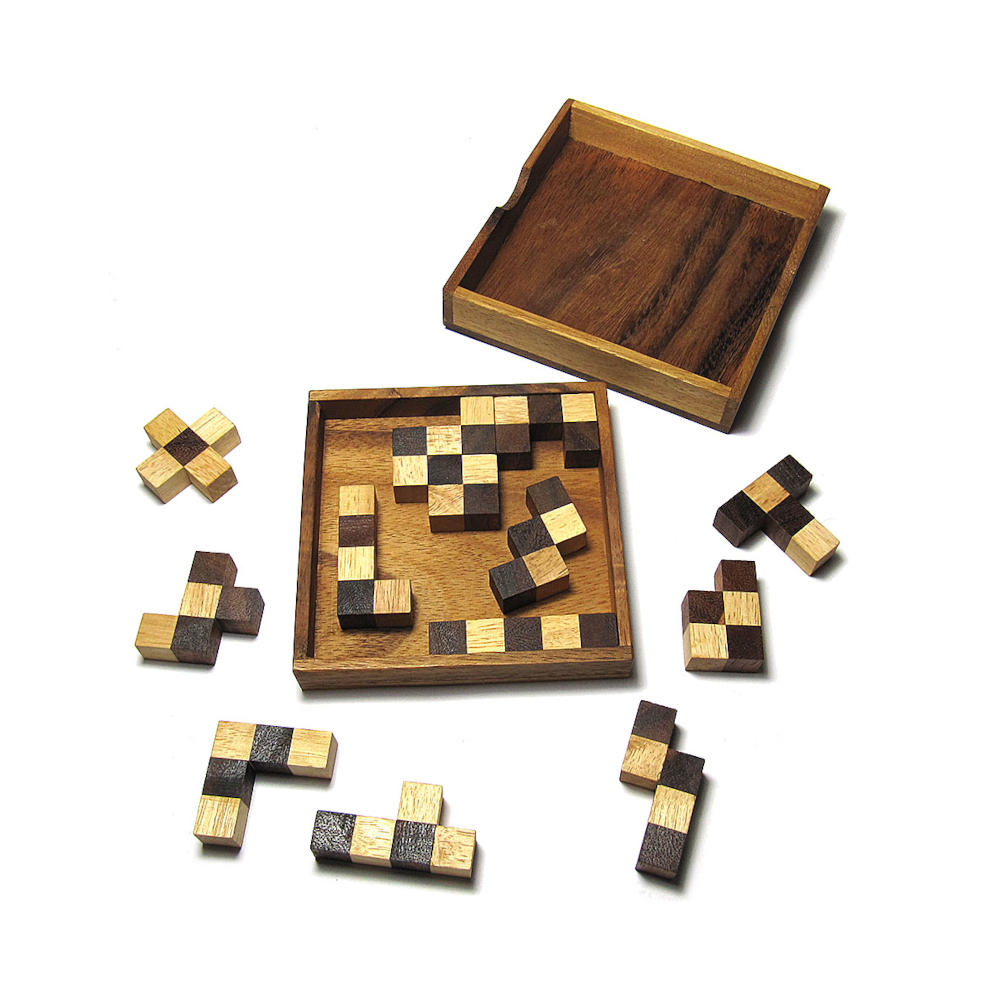
Coloring the cubes of each Pentomino piece alternately light and dark creates a checkerboard pattern. Many shapes then have far fewer solutions, and some have none at all. This makes the puzzle noticeably more challenging.
Each Pentomino piece can be given one of two opposite checkerboard colorings: the light and dark colors can be swapped. This makes it possible to assemble many different sets of checkerboard Pentomino pieces.
Resources & Downloads
3D-Printing Templates
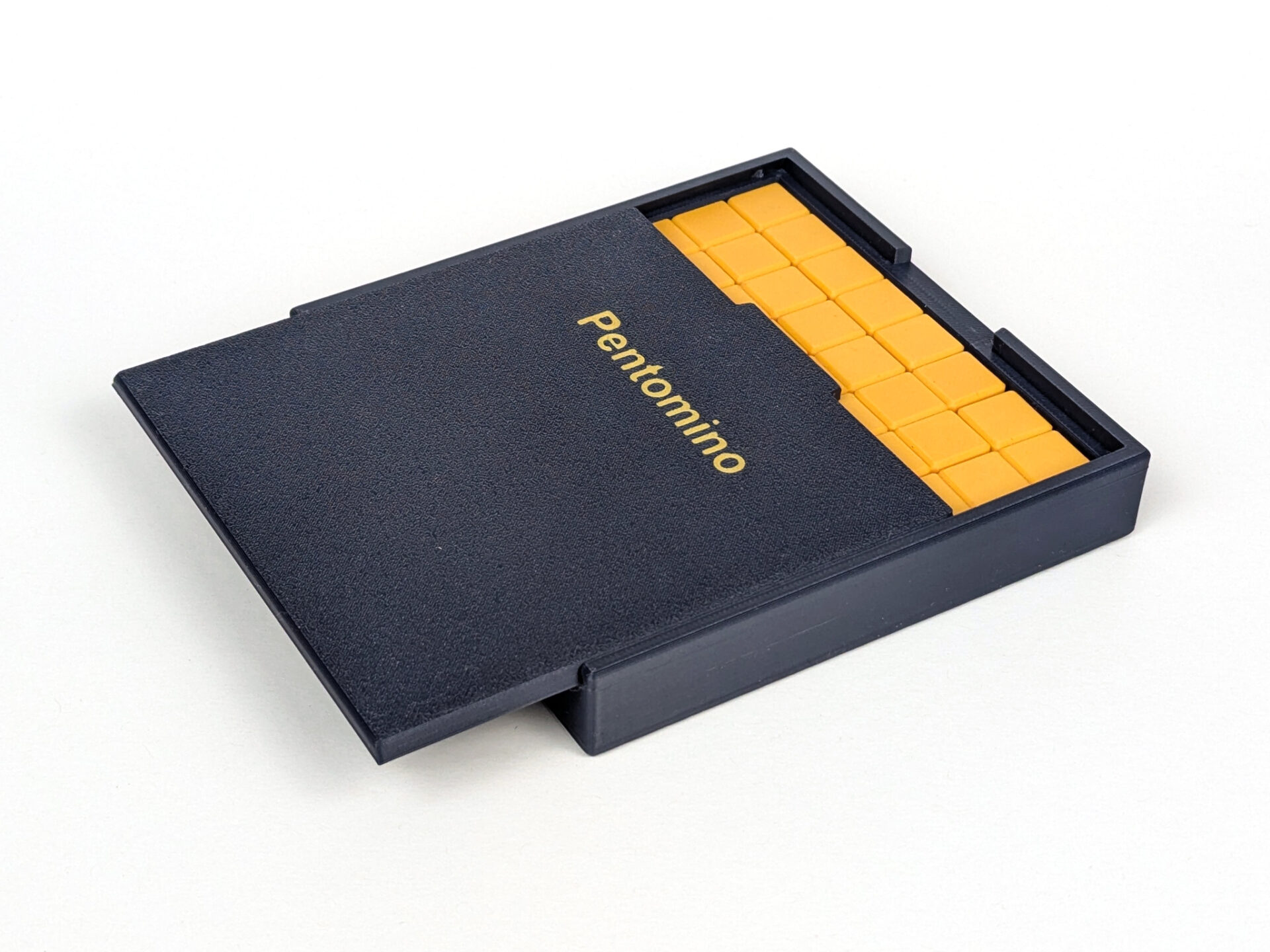
The 3D-printing files include twelve Pentomino pieces, one tetromino, and a box with a sliding lid.
Online 3D Pentomino Solver
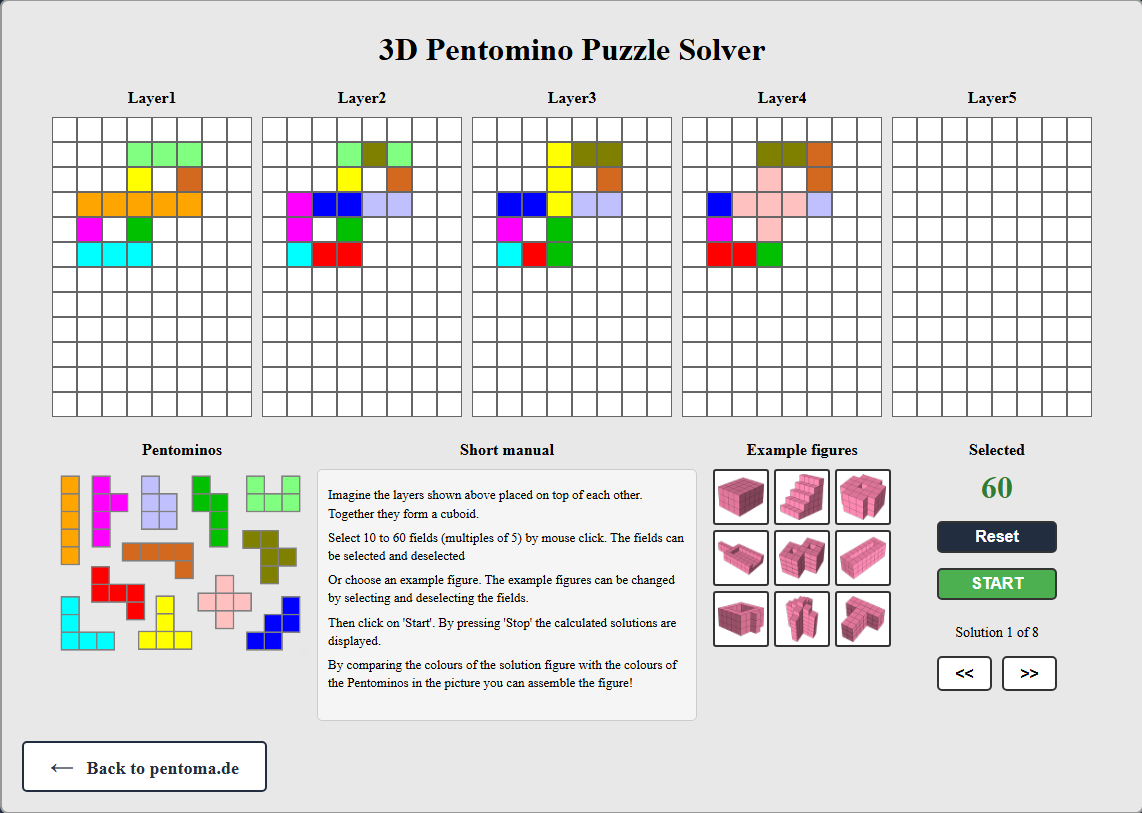
The Online 3D Pentomino Solver runs directly in your browser, with no installation or download required. Shapes can be assembled with a few mouse clicks and then solved. Compared with the desktop version, its feature set is more limited: it cannot solve checkerboard Pentomino puzzles.
The solver can find solutions for shapes made from all twelve Pentomino pieces, as well as shapes that use between two and eleven pieces.
The solver does not combine symmetrical solutions: solutions that differ only by rotation or reflection are listed separately. The interface is in English.